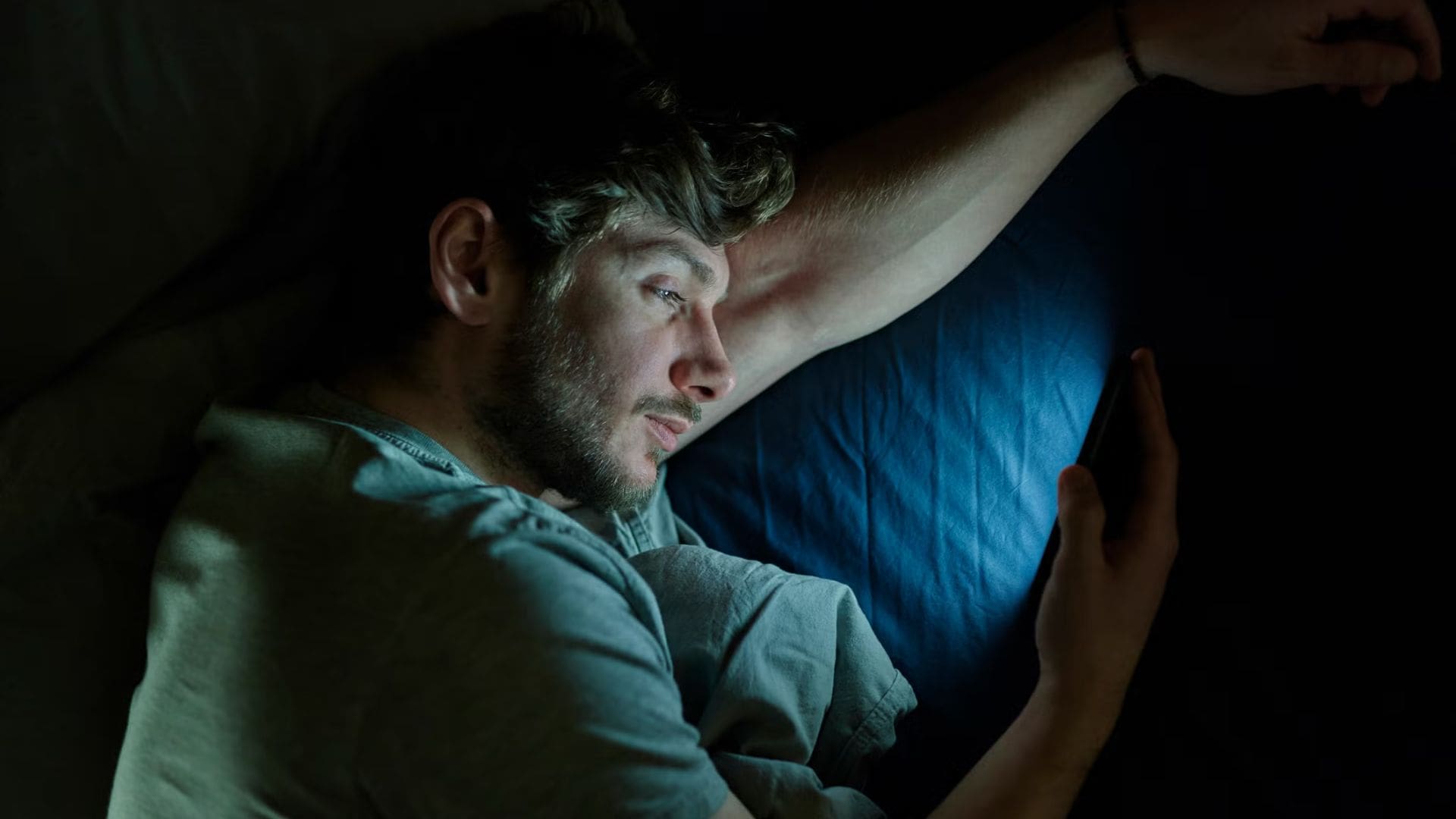
It’s been a long day. Work has been relentless, your brain feels fried and finally getting into bed with your phone feels like the first chance you’ve had to switch off. A quick scroll turns into 40 minutes of Instagram, messages, videos and news before your eyes start to close. It feels like winding down. Physiologically, it’s the opposite. Sleep does not start when you close your eyes. It starts in the hour before.
The problem with late-night phone use is not just the screen itself. It is the stimulation. Every swipe, notification and short-form video keeps the brain engaged when it should be slowing down. Instead of shifting into a calmer parasympathetic state, often called the body’s “rest and digest” mode, the nervous system stays alert and active. You are not just checking your phone at midnight. You are keeping your brain in daytime mode at midnight.
What Your Phone Is Actually Doing to Your Brain Before Bed
When it comes to sleep, we have more information than ever before. Podcasts, wearables, sleep trackers and social media have made sleep science mainstream. Yet many people are sleeping worse than ever, and phone use is a major reason why. Blue light exposure can suppress melatonin production, the hormone that helps regulate your sleep cycle. But the bigger issue is often mental stimulation. Social media and short-form content create a constant stream of novelty that keeps the brain alert, emotionally engaged and reward-seeking long after the body is physically tired.
READ MORE: Want Better Sleep? Do This 1–2 Hours Before Bed
News updates, messages and emotionally charged content can also activate the brain’s engagement and stress-response systems, making it harder to transition into recovery mode. At night, the brain responds best to darkness, quiet and lower levels of stimulation. Bright screens, loud content and endless scrolling send the opposite signal. Even simple changes such as dimming the lights, lowering screen brightness and creating a cooler sleep environment can help the body prepare for sleep. Studies suggest that screen use before bed is linked to increased physiological arousal and delayed sleep onset.
You’re Not Losing Sleep. You’re Downgrading It
If your phone is the last thing you use before falling asleep, there is a good chance your sleep quality is already being affected. You may still fall asleep quickly, but that does not necessarily mean your sleep is restorative. The issue is not always the number of hours you spend asleep. It is the quality of those hours.
Excessive stimulation before bed can make deep sleep lighter and more fragmented. Deep sleep is the stage most closely linked to physical recovery, hormone regulation and cognitive restoration. As a result, you may experience more micro-awakenings throughout the night, even if you do not consciously remember them. The next day often tells the story. Brain fog. Low energy. Poor focus. Stronger cravings for caffeine, sugar and other quick sources of stimulation.
The Morning Phone Habit Making Your Stress Worse
For many people, the alarm goes off and the phone is immediately back in hand. Messages. Emails. Instagram. News alerts. Before the brain has fully woken up, it is already consuming high-stimulation input. That immediate dopamine hit trains the brain to seek more stimulation throughout the day. Over time, this can leave you feeling more distracted, reactive and mentally scattered. The problem is not just what happens before bed. It is the full 24-hour cycle.
READ MORE: Mouth Taping at Night: Can This New Trend Help You Sleep, Breathe & Live Better?
How you start your morning often shapes the state of your nervous system for the rest of the day. If the first thing your brain receives is noise and stimulation, stress levels tend to stay elevated. When mornings begin with movement, daylight, hydration or exercise, focus and emotional regulation often improve significantly. One of the simplest habits you can adopt is avoiding social media for the first 20 to 30 minutes after waking.
The 60-Minute Wind-Down That Improves Sleep Quality
Creating a proper wind-down routine does more than improve sleep. It can enhance recovery, mood, focus, stress management and overall energy levels. The goal is not to eliminate stimulation completely. It is to reduce it gradually. Think of it as transitioning the brain out of performance mode and into recovery mode. Around 60 to 90 minutes before bed, start lowering stimulation intentionally. Dim the lights. Lower your phone’s brightness. Avoid emotionally activating content such as work emails, social media arguments and constant news updates. If possible, keep your phone out of reach or outside the bedroom altogether.
Replace scrolling with lower-stimulation habits that naturally calm the nervous system, such as reading, stretching, journaling, taking a hot shower or having a simple conversation. The body responds well to consistency. Repeating the same calming behaviours each evening teaches the brain that sleep is approaching.
Better Sleep Starts Before Bedtime
Most people do not struggle with sleep because they are lazy or undisciplined. They struggle because they have no boundaries around the behaviours that create quality sleep in the first place. Phones are incredible tools, but constant access to stimulation can interfere with the recovery systems that sleep depends on.
READ MORE: Get the Sleep You Really Need—an Expert Answers Your Most Pressing Questions
The goal is not perfection. It is creating healthier boundaries around the moments that matter most. Sleep quality is shaped long before your head hits the pillow and long before you leave the bed in the morning. Protecting those evening and morning windows can improve far more than sleep alone. Energy improves. Recovery improves. Mood stabilises. Focus sharpens. Better sleep is not just about what happens overnight. It is about what happens before and after it, too.
Quick Guide: Fixing Your Phone Habits
Start with the final hour before bed. Put your phone away from your bedside and, ideally, outside the room. Keep lighting low so your brain can begin to downshift. Replace scrolling with lower-stimulation habits such as reading, stretching, journaling or taking a shower. The aim is to reduce activation, not simply fill time.
In the morning, avoid your phone for the first 20 to 30 minutes after waking. Use that window for daylight exposure, movement, hydration or breakfast before consuming information. You do not need to be perfect. Break the cycle at both ends of the day. Less stimulation at night and less stimulation first thing in the morning can make a meaningful difference to your sleep, recovery and overall wellbeing.

Meet Sam Neame
Sam Neame is a U.K.-based performance coach and writer covering sleep, performance, fitness, and longevity. Working with Olympic athletes and high-performing individuals, his work explores the intersection of recovery, health, and sustainable performance, and how better habits can help people perform, feel, and live better over time.