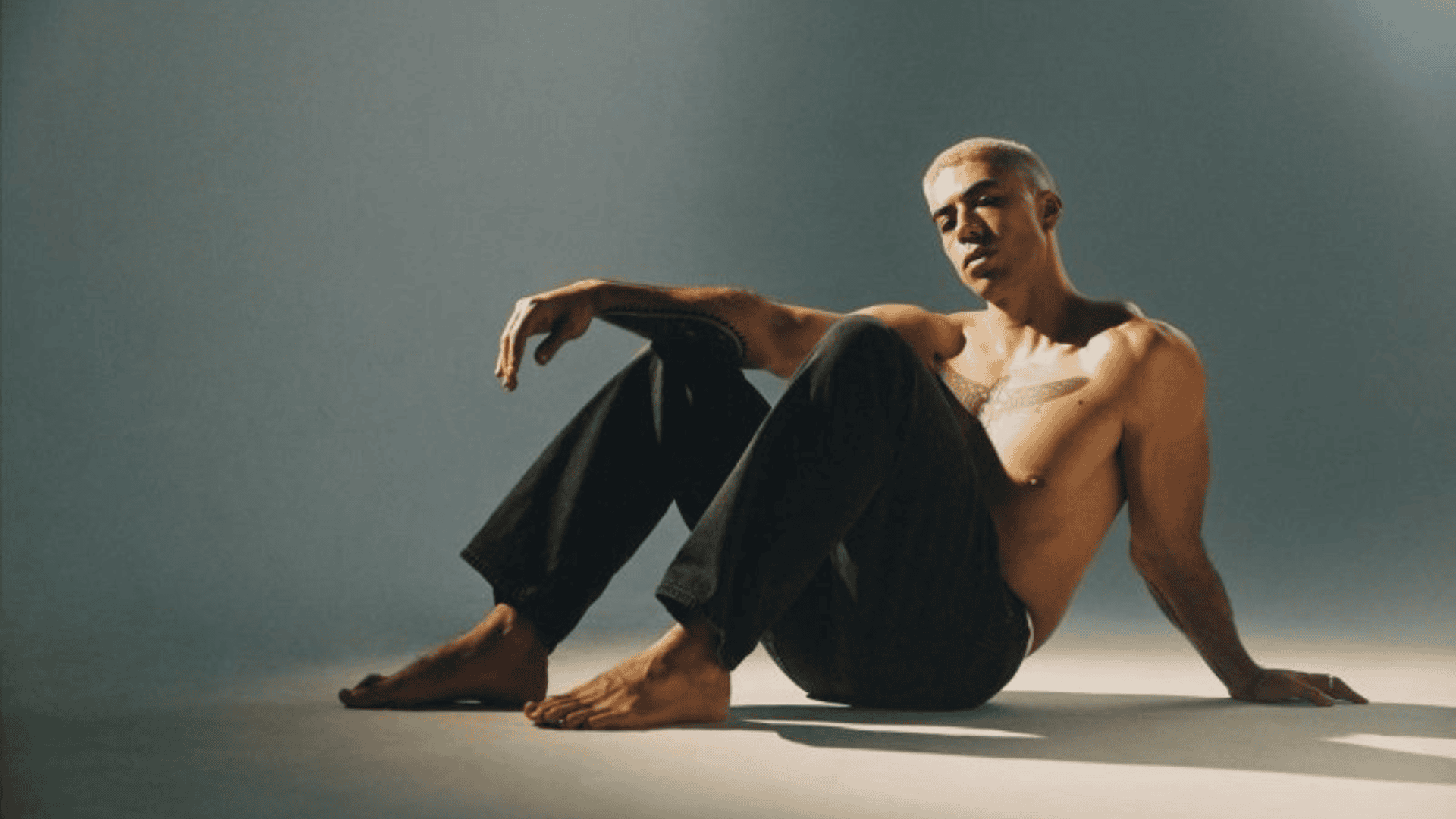
After finally performing for his South African fans, New Zealand singer TEEKS sits down with Men’s Health to talk about the deafening Durban crowd, the training behind his physique, protecting his famously rich voice, rethinking masculinity and why his next musical chapter is all about desire, pleasure and having a lot more fun.
It is a gloomy Friday afternoon in Johannesburg when I meet TEEKS at the Sony Music Studios in Rosebank. The sky outside is grey and heavy, threatening the kind of Highveld storm that eventually announces itself midway through our conversation with a rumble of thunder. Inside, things are considerably warmer.
Before we properly get going, there is a small lesson in language. I greet him with kia ora, a Māori expression I had been instructed to use by a friend before the interview. TEEKS explains that while it works as a greeting, its meaning runs deeper.
“It means to be well,” he says.
Then comes morena. In Māori, he tells me, it is essentially “good morning”. In Sesotho, of course, Morena carries an entirely different meaning, referring to a lord or chief. For a few minutes we compare notes, laughing about the unexpected similarities and coincidences between languages separated by thousands of kilometres. It feels like an appropriate way to begin a conversation with an artist who, despite coming from the other side of the world, has discovered that his music already has a home here. And South Africa, it turns out, was very ready for TEEKS.
South Africa Was Louder Than He Expected
By the time we sit down, TEEKS has had the chance to experience South African audiences for himself. Before arriving, he had heard about the energy. Hearing about it and standing in front of it are two very different things. “The volume was not what I was expecting,” he says. Durban, in particular, caught him off guard.
Because the venue was smaller and indoors, the sound of the audience became almost overwhelming. “It was so loud that we couldn’t even hear ourselves on stage,” he says. “That’s something that I’m not used to.” But it wasn’t simply the volume. They knew the words. All of them.
TEEKS expected songs such as “First Time” to land. What surprised him were the slower, more intimate cuts. “They sang along to every song. They knew word for word,” he says. “I thought maybe one or two songs, like ‘First Time’, sure. But the more niche songs, the slower ballads, they were singing every word.”
He pauses as if he is still processing it. “I was blown away.” For an artist whose music has often felt like the kind you experience privately, headphones on, door closed, feelings very much activated, hearing hundreds of people return those words to him was something else entirely. “The reception has been amazing,” he says. “It surpassed any expectation that I had.”
The TEEKS Voice Requires Some Serious Maintenance
Listening to TEEKS sing, you might assume that low, rich baritone simply pours out of him without much effort. Not quite. Touring presents its own physical challenge, particularly when your instrument happens to live inside your body.
“Being on a plane is not ideal, especially for extended periods of time,” he says. “It dries out the throat and the vocal cords.” His voice, he admits, is particularly sensitive. “My voice is quite fragile. Because of the way I sing, and because I sing quite low, it strains a lot on the vocal cords.”
That means looking after himself becomes part of the job. TEEKS travels with a nebuliser, which he describes as similar to a steamer, and uses it before performances and, when possible, afterwards to keep his vocal cords hydrated. Water is non-negotiable. So too, somewhat ironically for somebody spending his day doing interviews, is limiting how much he speaks.
“Talking is not great for the singing voice,” he says. There is a mental routine too. Before stepping onstage, TEEKS tries to get himself into the right headspace through meditation and a little quiet preparation. Then comes the most important instruction. Have a good time.
Why the Gym Became Part of the ‘My Boy’ World
Anyone who has watched the video for “My Boy” will know there is considerably more physicality in this era of TEEKS. The gym. The bodies. The tension. The masculinity. Also, yes, TEEKS is looking seriously fit. For him, however, the training imagery wasn’t simply about creating something aesthetically pleasing. It was an extension of the song and, importantly, of himself. “For me, the energy of the song is quite masculine,” he explains. “So I wanted that to show in the visual.”
Authenticity is a word that repeatedly comes up during our conversation. Whether he is talking about music, identity or training, TEEKS seems increasingly uninterested in creating distance between the artist people see and the person he actually is. “I really love going to the gym and I love training,” he says. “Our music is only an extension of ourselves.”
The polished final video disguises just how chaotic its creation actually was. TEEKS says the entire thing came together in roughly a week. After getting the green light, the team flew from New Zealand to Sydney for the shoot. The cast was only confirmed the night before filming. “I had a lot of anxiety,” he admits. “I was stressed because it was a big risk.” You wouldn’t know it watching the final product. He laughs when I tell him as much.
So, What Does TEEKS Actually Do in the Gym?
When he is touring, the answer is: whatever he can. “When I’m travelling and touring, everything goes out the window,” he says. “I have every intention of keeping it going, but man, it’s so difficult when you’re travelling all the time.” Home is different.There, TEEKS is in the gym most days, generally for around an hour, although some sessions can stretch closer to two. His training is refreshingly uncomplicated. “I either train on my own, or sometimes I do some PT because the owner of the gym is a good friend of mine and he trains me sometimes,” he says. “But it’s just basic weightlifting.”
READ MORE: Easy Muscle: Try This Workout from SA’s No.1 CrossFit Athlete
He has also dabbled in CrossFit and likes the simplicity of arriving, being told what suffering awaits you, getting it done and moving on with the day. “You can just show up and the workout is there,” he says. “You just get it done and then that’s the morning. You feel good for the day.” And HYROX? Maybe. “If I trained a bit more,” he laughs. “I need to do more cardio, I think.” Consider that the beginning of the TEEKS HYROX campaign.
For TEEKS, Training Is Therapy
There is another reason he keeps returning to the gym, and it has little to do with what he looks like in a music video. “I think it’s incredibly important to keep active,” he says. “No matter what you’re doing in life, I think it’s important to keep the body moving and to keep the body strong.”
That philosophy extends beyond lifting weights. TEEKS is conscious of his diet and what he puts into his body, particularly because staying healthy directly affects his ability to perform.
“Being physically fit is important for touring, for sure,” he says. “Keeping the lungs healthy. If you’re strong and fit, you’re less likely to be sick and frail.” But ask him what the gym does for his head and the answer becomes more interesting. “It’s very cathartic,” he says. “It’s like therapy.”
READ MORE: Inside Libho Geza’s Mindset as a Rising Athlete Who Treats Every Session Like a Personal Best
Music may be his profession and his great creative outlet, but sometimes you need something that has absolutely nothing to do with your work. The gym gives him that. “It’s something different to music,” he explains. “It’s something that I can do and focus on to have some type of release mentally.” For TEEKS, there is no separating the two. The physical benefits matter. The mental ones do too.
TEEKS Is Rethinking What It Means to Be Masculine
Perhaps that is why the conversation naturally moves from physical strength to another kind of strength. TEEKS’ music has never exactly been afraid of vulnerability. But as he has grown older, his understanding of masculinity has changed considerably.
“There’s a lot of unlearning that I had to do,” he says. Growing up, he remembers the familiar instructions many men receive. Don’t be too sensitive. Don’t be soft. Don’t express too much. “We’re conditioned and programmed to see the world in a certain way, or to think about what it means to be a man,” he says. The consequences, he believes, are significant. “Men struggle with expressing our feelings and articulating our feelings,” he says. “I feel like emotional intelligence and emotional awareness are key to leading a healthy life.”
READ MORE: The Rise of Social Fathers in South Africa: How Male Mentors Are Changing Young Lives
TEEKS no longer sees openness and sensitivity as threats to masculinity. Quite the opposite. “Being open and softening to your feelings and emotions is a sign of security,” he says. “It’s a sign of security in your identity, security in your sexuality.” Then he takes the thought a little further.
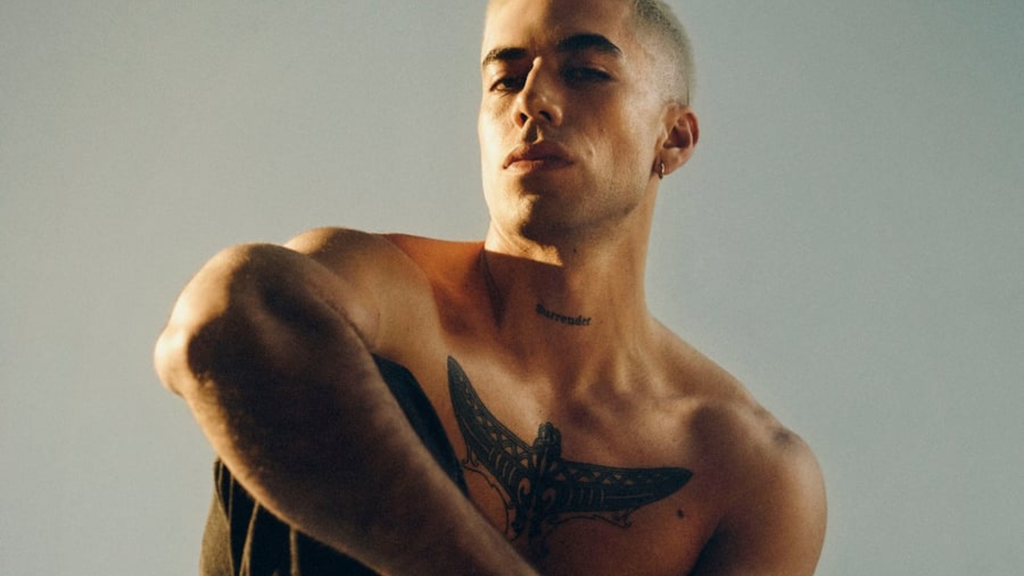
Where he once regarded masculinity and femininity as opposing forces, he now sees them as parts of the same person. “I used to see masculinity and femininity as two separate things,” he says. “Now I feel like they’re just two parts of a whole. They are one.” People may naturally feel stronger in one or the other, he explains, but both coexist. “I think it’s important to lean into both and accept and acknowledge both.” Outside, right on cue, thunder rolls across Johannesburg. TEEKS looks up. “Is that thunder?” It is.
The New TEEKS Cares a Lot Less
Five years can do plenty to a man. Put the TEEKS who made Something To Feel next to the artist sitting opposite me today and he believes the biggest transformation is less about music than perspective. “My outlook on life. My worldview. My outlook on myself as a person,” he says. And then comes perhaps the most liberating development. “I feel like I care a lot less.” He smiles.
“In the best way.” What he means is that other people’s opinions have lost some of their power. The most important thing, and my goal in everything that I try to do, is to be as authentic as I can be to myself and honest to myself.” That freedom is all over his new music.
He Had to Live Before He Could Write Again
After Something To Feel, TEEKS stopped writing for a while. Maybe, he admits, for slightly too long. But the pause was necessary. “I needed to fill my cup up,” he says. “I needed to live a little bit and get some life experience.” So he travelled. He read. He listened to music. He consumed poetry, philosophy and books about spirituality. When his brain needed something less demanding, he disappeared into fantasy novels. His recommendation for the Men’s Health book club?
READ MORE: Why Ocean Vuong’s Writing on Life, Loss and Belonging Matters
The Sword of Kaigen. Fantasy, he says, lets him switch off in a way heavier reading sometimes cannot. “If I just want to feel like I’m watching a movie, I’ll just read fiction.” But ultimately, his creative fuel comes from something less comfortable. Life. “I just need to go through things in order to feel like I have something to say,” he says. That can mean joy. It can also mean pain and trauma. All of it, he explains, becomes material stored somewhere inside him until the time comes to create again.
And when that time finally came, it came quickly. TEEKS says he wrote and recorded most of his next album last year. “I was full-on in the zone,” he says. “I was creating and I was really enjoying it.” That last part matters. “It’s one thing to create, but to really enjoy creating is another thing.”
South Africa Might Find Its Way Into What Comes Next
Touring has become another source of inspiration. There is something powerful about travelling thousands of kilometres only to discover people on another continent know the intimate songs you once wrote privately. “You get to see how the music impacts other people,” he says. “It makes you want to keep doing it more.” South Africa has left its mark too.
TEEKS tells me he would like his next visit to be less rushed, with enough space in the schedule for actual writing sessions and collaboration. He names Bongeziwe Mabandla as one artist whose work he admires. “I’m a big fan of his music,” TEEKS says.
But his interest stretches further. “There’s so much talent here. The music is incredible,” he says. “I would love to work with artists from South Africa or from Africa in general.” Part of that interest comes from the cultural parallels he has noticed during his time here, echoes between African and Māori experiences that made themselves apparent even in our first few minutes discussing language. “There are a lot of cultural parallels,” he says. “There are some similarities in our cultures, which is amazing.”
Welcome to TEEKS’ Sexy Era
So, after the heartbreak, introspection and restraint of Something To Feel, what exactly does this next version of TEEKS sound like? For starters, considerably less sad. “I didn’t want to write any sad songs,” he says. Why? “I’ve gone through that.” Fair enough. “I’m at a point in my life where I just want to enjoy myself.” That desire has reshaped the sound, mood and subject matter of the new record. TEEKS describes it as playful and summery. There are fewer ballads and more explorations of desire, pleasure and intimacy. “It is sensual and erotic in a way,” he says.
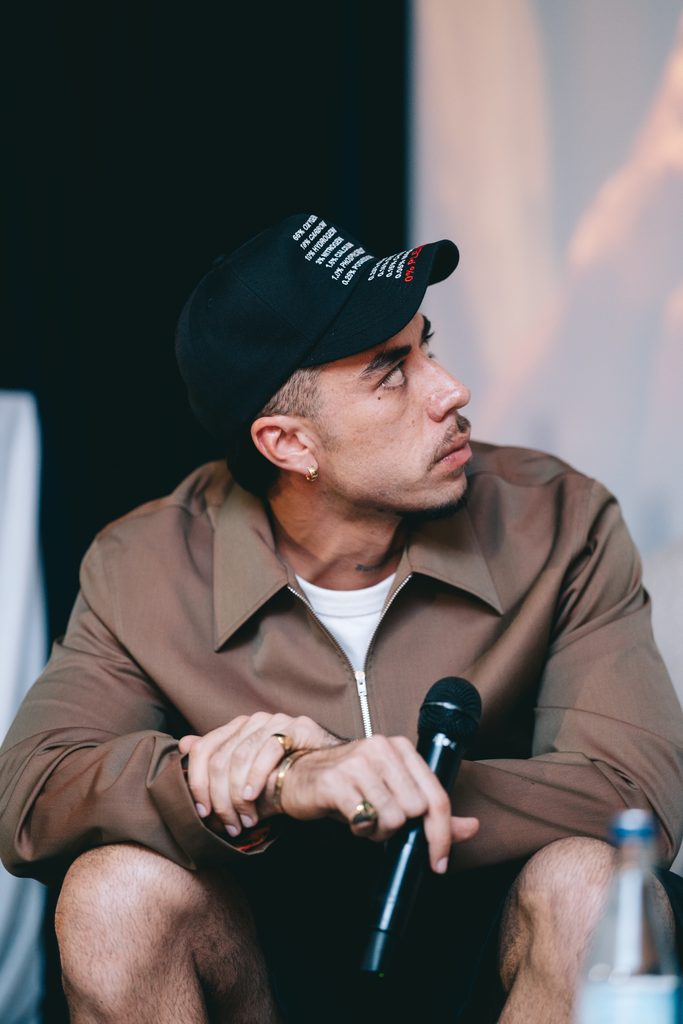
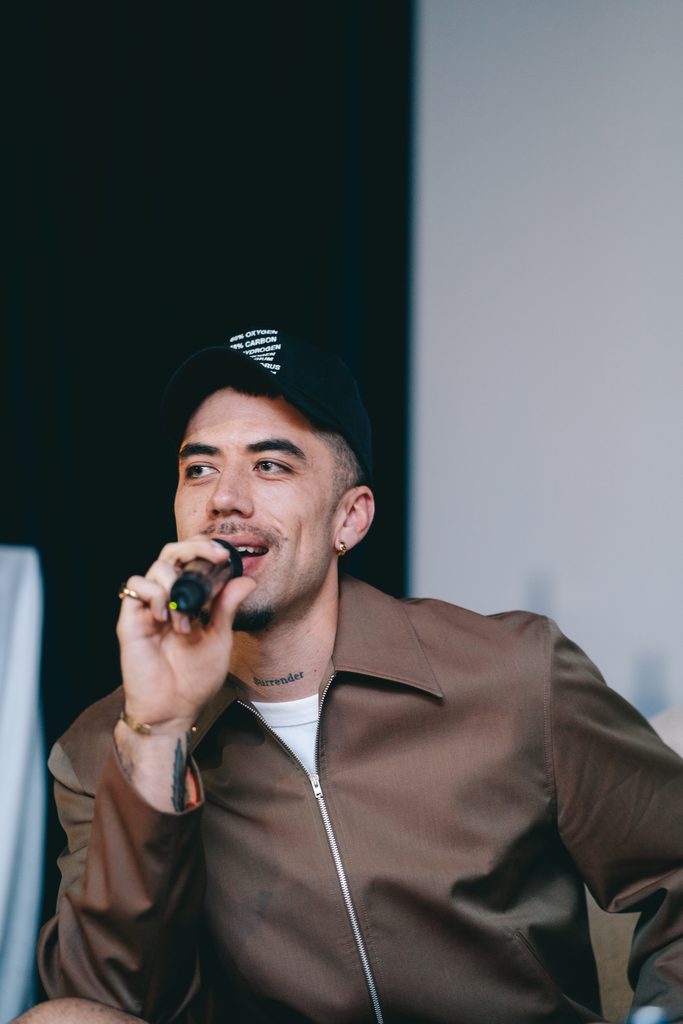
That, he admits, is a side of himself audiences haven’t necessarily seen before. If Something To Feel was the reserved TEEKS, the impeccably dressed gentleman quietly breaking your heart in the corner of the room, the next era sounds as though he has finally decided to leave the corner. “The last album was a bit more reserved,” he says. “It was classy.” And this one? “This new record has a bit more grit to it.” There is another pause as he searches for exactly the right description. “It’s outside.” TEEKS laughs.
“I think it’s just more fun.” That might be the best way to describe the man sitting across from me too. Still thoughtful. Still deeply introspective. Still capable of making vulnerability sound beautiful. But lighter. Stronger. A little less concerned with what everybody else thinks. And, perhaps most importantly, ready to have some fun.