
There is a certain kind of athlete who does not need external pressure to push harder. That drive comes from within. It shows up in the first alarm of the morning, in the stiffness of the body before a session and in the quiet decision to show up anyway. No matter what. In South African sport, where rugby culture blends physical expectation with mental toughness, that mindset is not unusual. What is rare is the way some athletes articulate it with simplicity rather than bravado.
For Libhongolethu Geza, performance is not a performance. It’s repetition, discipline and a daily negotiation with limits that are always moving. And for him, that negotiation always starts the same way.
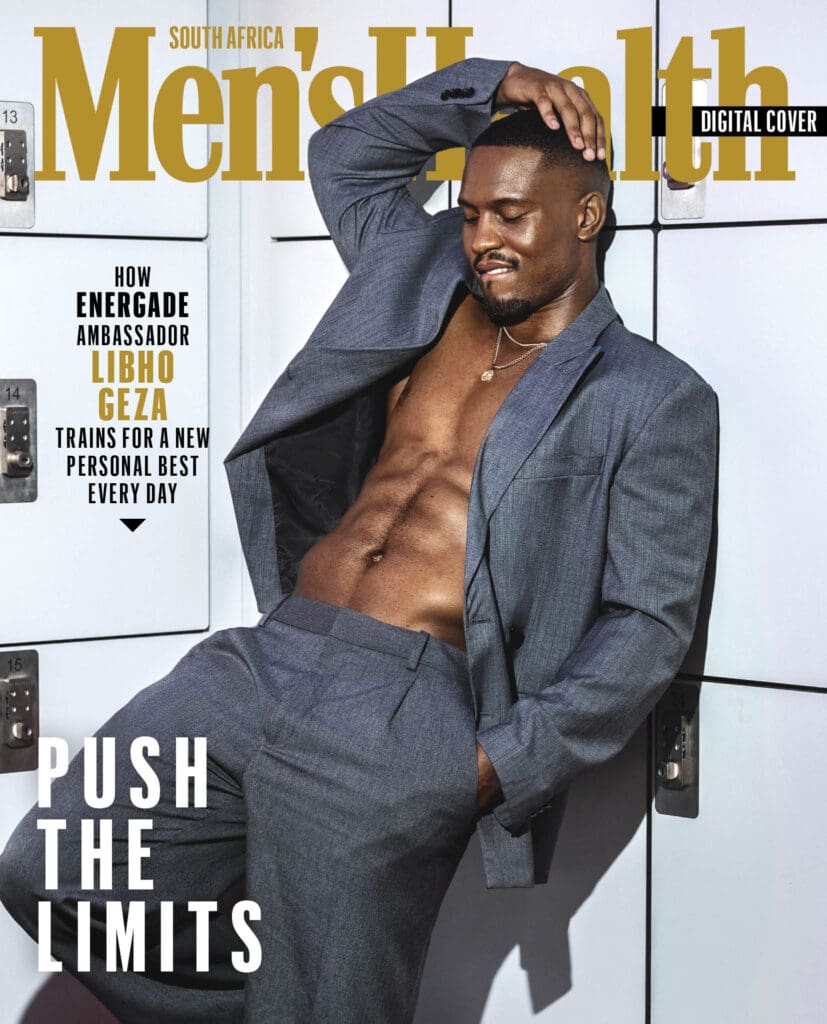
The Session That Changes Nothing and Everything
Ask Libho Geza about chasing a personal best and he does not romanticise it. There is no pause for effect, no attempt to dress it up as something bigger than it is. “I think those are the sessions I enjoy the most,” he says. “It’s the session that really challenges me. I like a good challenge, so I get keen on it. I wake up in the morning imagining pushing for my personal best.” In elite sport, the idea of a personal best is often treated like a milestone. Something to celebrate. Something final. For him, it’s more like a recurring instruction.
“I’m sure I [will] wake up in the morning imagining pushing for my personal best and I get to the session and do it, you know and see how much my body can do.” What stands out is not the intensity of the statement but the ordinariness of it. There is no separation between ambition and execution. It’s just the day. And then there is the reality underneath it all.
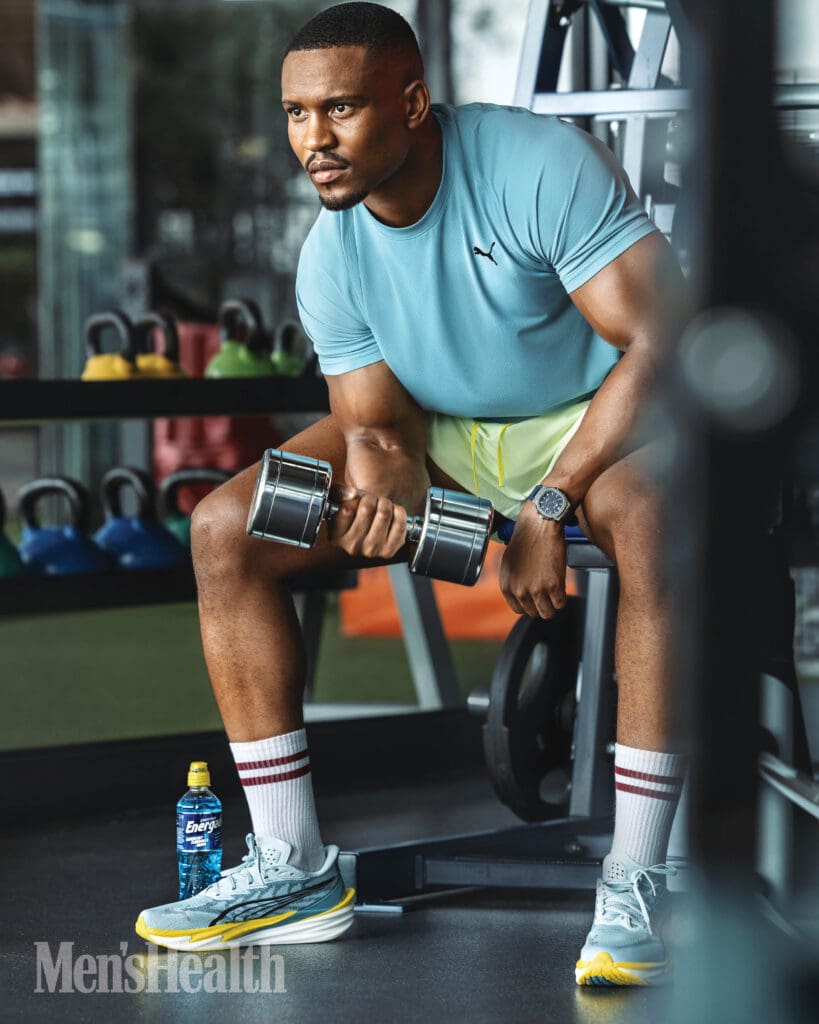
During those high-intensity moments, recovery and readiness become part of the performance itself. He leans into hydration as a non-negotiable, reaching for Energade to stay locked in when sessions peak and fatigue starts to creep in. For him, it’s not a ritual – it’s maintenance; the same way you prepare your body for what it already knows is coming.
The Edge Where Control Begins and Ends
Physical performance is often framed as domination over the body. Libho describes it differently: not control, but discovery. “I’m very strong, man. Like surprisingly strong,” he says, before immediately widening the frame. “And I think everyone would feel like that if they pushed themselves to their limits.”
That idea of limits is not abstract for him. It’s something tested regularly in training environments where fatigue is expected, not avoided. But he is also careful not to mythologise it. “Obviously, please do it safely. It’s a very dangerous sport to play, trying to push for your personal best.” There is a maturity in the way he anchors the conversation back to health.
“Your health comes first regardless of what you’re trying to do physically.”
“When you reach that threshold of mind over matter, it’s beautiful. It’s just a beautiful feeling. It feels euphoric.”
Even in those moments, hydration and recovery remain part of the system. He describes it simply, almost instinctively, like reaching for Energade after intense exertion to replenish what the body has just given away. That word, euphoric, is not used lightly. It’s not about winning. It’s about reaching a point where resistance turns into clarity.
Built From Something Bigger Than Sport
Every athlete has a story about where their drive comes from. For Libho, it’s not complicated or distant. It is home. “My parents inspire me, man,” he says. “From where they came from and where they are now… if you told the 20-year-old version of my parents that story, I don’t think they would believe it.”
There is a quiet admiration in the way he speaks about them. Not just pride in their journey but awareness of what it took to get there.
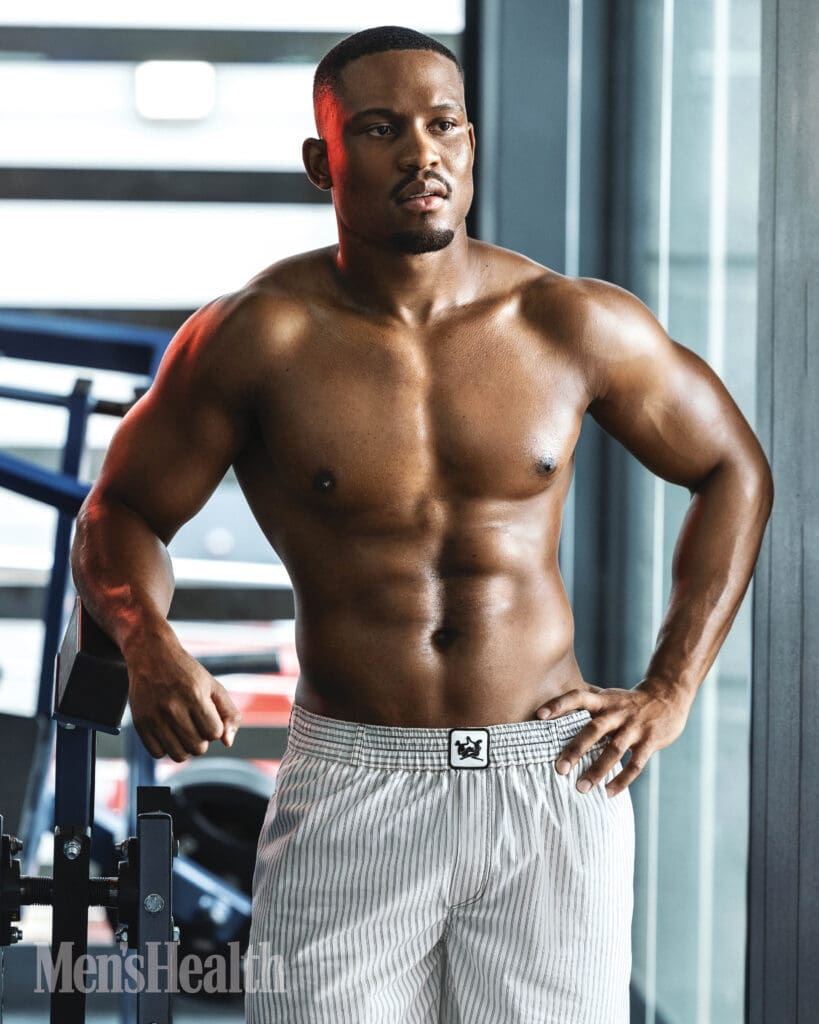
“Now they have a son who lives in Bryanston who’s pushing his own thing,” he says. “That’s my biggest motivation.” That line carries more weight than it first appears. It’s not just about success. It’s about continuation. About being part of a family story that keeps moving forward in different forms. In that sense, training is not separate from identity. It’s an extension of it.
Strength As Something You Learn By Doing
Strength is often treated as something measurable. Weight on a bar. Time on a clock. Distance on a field. But for Geza, it’s something more instinctive. “I am enjoying reaping the rewards of my superpowers,” he says. “When you enjoy sprinting, accelerating, jumping, it feels amazing to take part in that.”
There is a sense of play in the way he describes elite physical output. Not because it’s easy, but because it’s familiar. Then comes the honesty that grounds it.
“I actually have no idea what deadlift really trains,” he laughs. “But it’s my favourite exercise to do in the gym. It’s my strongest.” That contradiction is important. He does not pretend to have every technical answer. Instead, he trusts what his body communicates.
“It’s a mind-core connection. That pushing feeling is so euphoric once you get to the top.” In those peak training moments, hydration again becomes part of the rhythm, with Energade acting as a simple but consistent support tool in sustaining output across demanding sessions. In that moment, theory doesn’t matter – execution does.
The Discipline Of Simply Continuing
If motivation is what starts a session, discipline is what completes it. For many athletes, consistency is framed as structure or routine. For him, it’s closer to necessity. “What keeps me consistent when things get tough is knowing that I don’t have a choice,” he says. “I can’t picture a day where I can’t get up and go train.” The language is blunt, but not harsh. It’s a matter of fact.
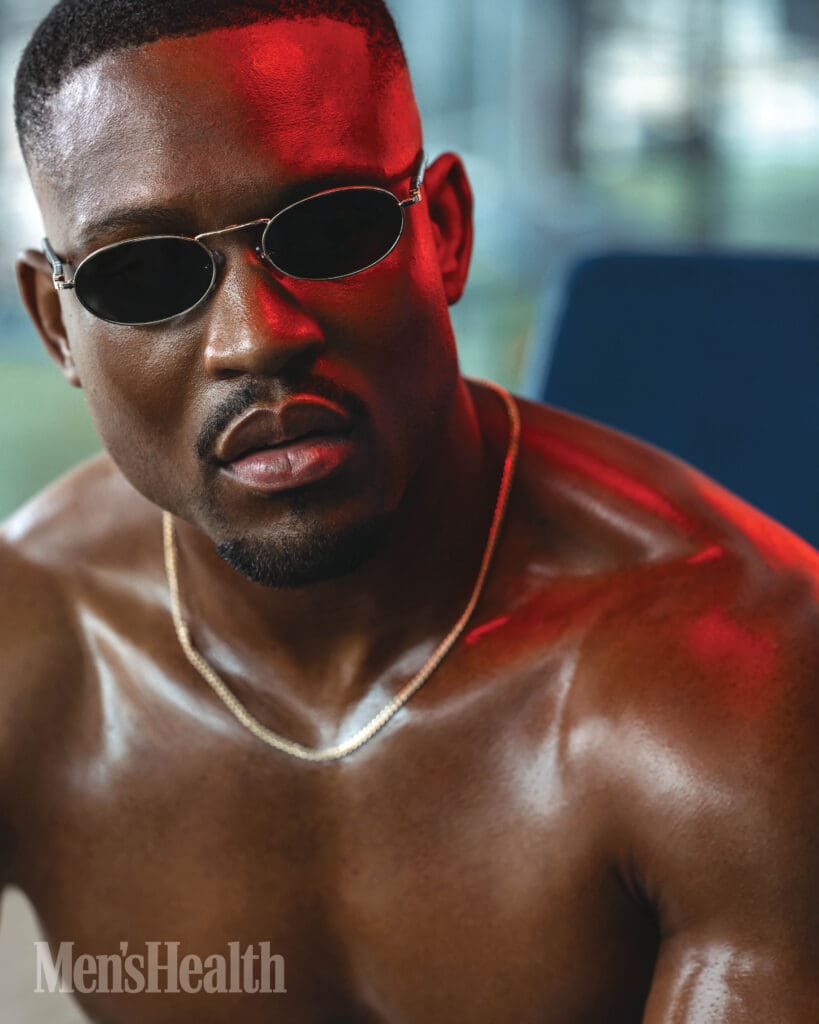
“Try [to] get up as soon as possible. Try to take a shower as soon as possible. Get in the car. Once I’m in the gym, it’s muscle memory.” There is something almost ritualistic in that sequence. A set of steps that removes negotiation from the equation. Then he reduces it even further. “Just think to yourself, tie my shoelaces.” It’s a reminder that consistency is not built in highlight moments. It’s built in the decision to start.
Progress That Refuses To Be Measured
In modern sport, progress is usually tracked. Data, numbers, outputs. But Geza resists that framing. “I really don’t focus on progress,” he says. “I focus on the process. The progress will come.”
That distinction matters. It shifts attention away from outcome and back toward repetition. Even personal bests, often treated as markers of achievement, are reframed entirely. “My personal best is being better than yesterday,” he says. “That’s what it means to me.” There is no endpoint in that logic. Only continuation.
What Keeps The Fire Alive
Motivation is often assumed to be constant in elite athletes. In reality, it changes shape depending on context. For Geza, it’s flexible. At times, it’s deeply personal. “My niece, she loves having an uncle that’s ripped,” he says with a smile. “She’s seven years old. She always says, ‘Libho, please flex.’” He laughs, then adds something more reflective.
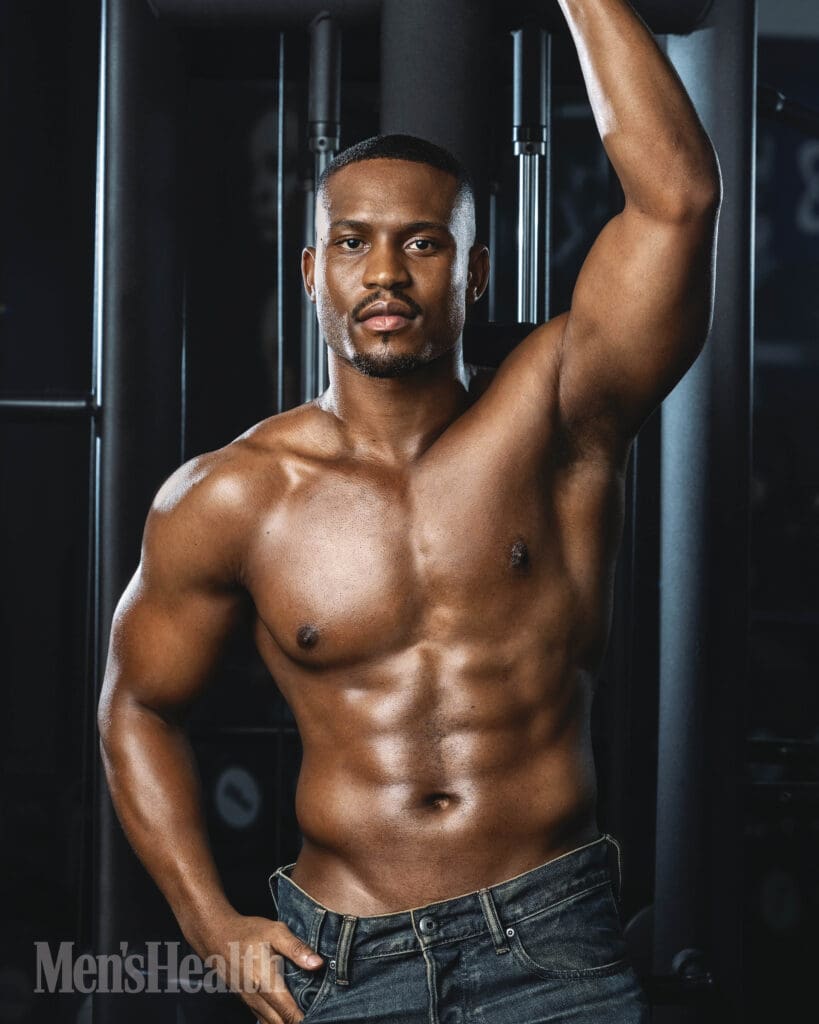
“That’s one of my biggest motivations. I just think about her and I dig deep.” It’s a reminder that performance is not always about self. Sometimes it’s about being seen by someone who looks up to you without conditions. But underneath that, there is something more consistent. “I take pride in a lot of things people might find mundane,” he says. “If I achieve something today, I take pride in that.” That pride becomes fuel. “I back myself. I back myself fully. I back myself in ridiculous ways.”
Today As a Marker, Not a Moment
By the end of the conversation, the focus shifts away from training and into something more symbolic. Today is not just another shoot. It’s a milestone that connects personal history to public recognition.
He speaks about growing up and seeing Men’s Health covers on bedroom walls. Rugby players. Athletes. Figures who seemed distant at the time. Now he is part of that visual archive. “It’s a very emotional day for me,” he says. “To be part of this organisation means a lot. It’s something I can show my children, my grandchildren.” He pauses. “And I did it through something I love.”
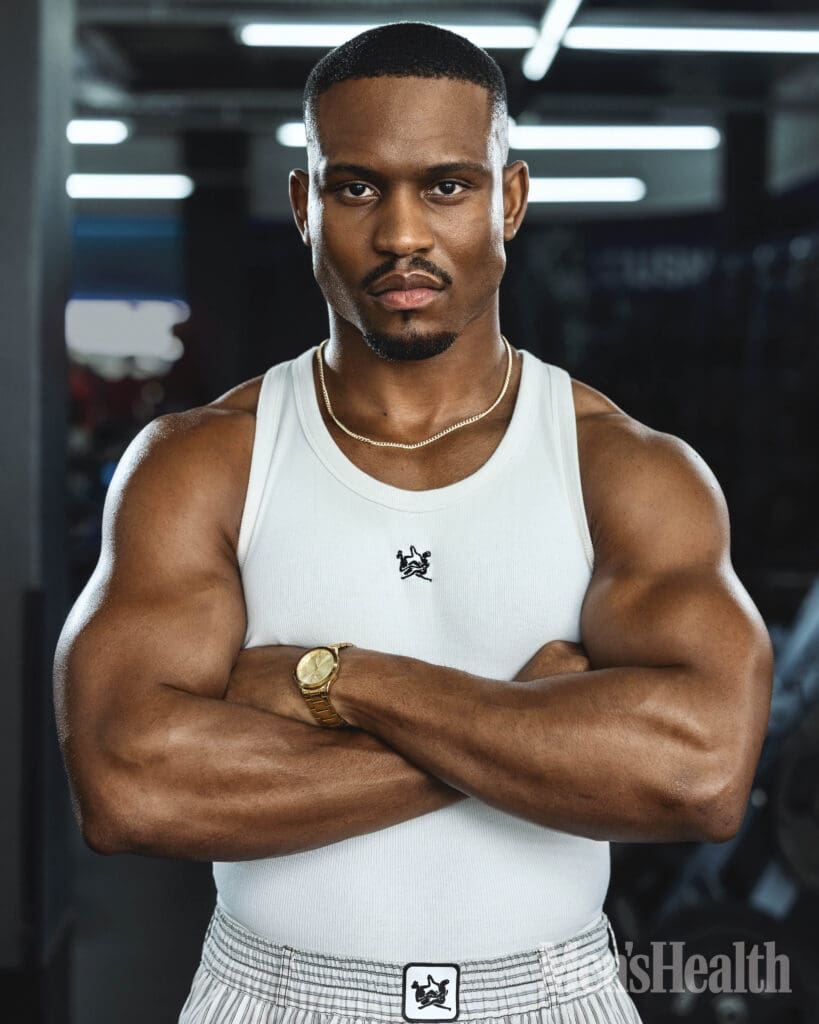
That final line is where everything converges. Not ambition alone. Not discipline alone. But alignment. Libho Geza does not present himself as someone chasing transformation. He presents himself as someone committed to repetition. To show up. Doing the work again, even when it’s familiar. In a world that often rewards extremes, his approach is quieter. But it’s also more sustainable. The goal is not to become someone else. It’s to keep becoming slightly better than the version of himself that existed yesterday.
Photography: Garreth Barclay
Styling: Onesimo Bam
Grooming: Anelisa Jiyane