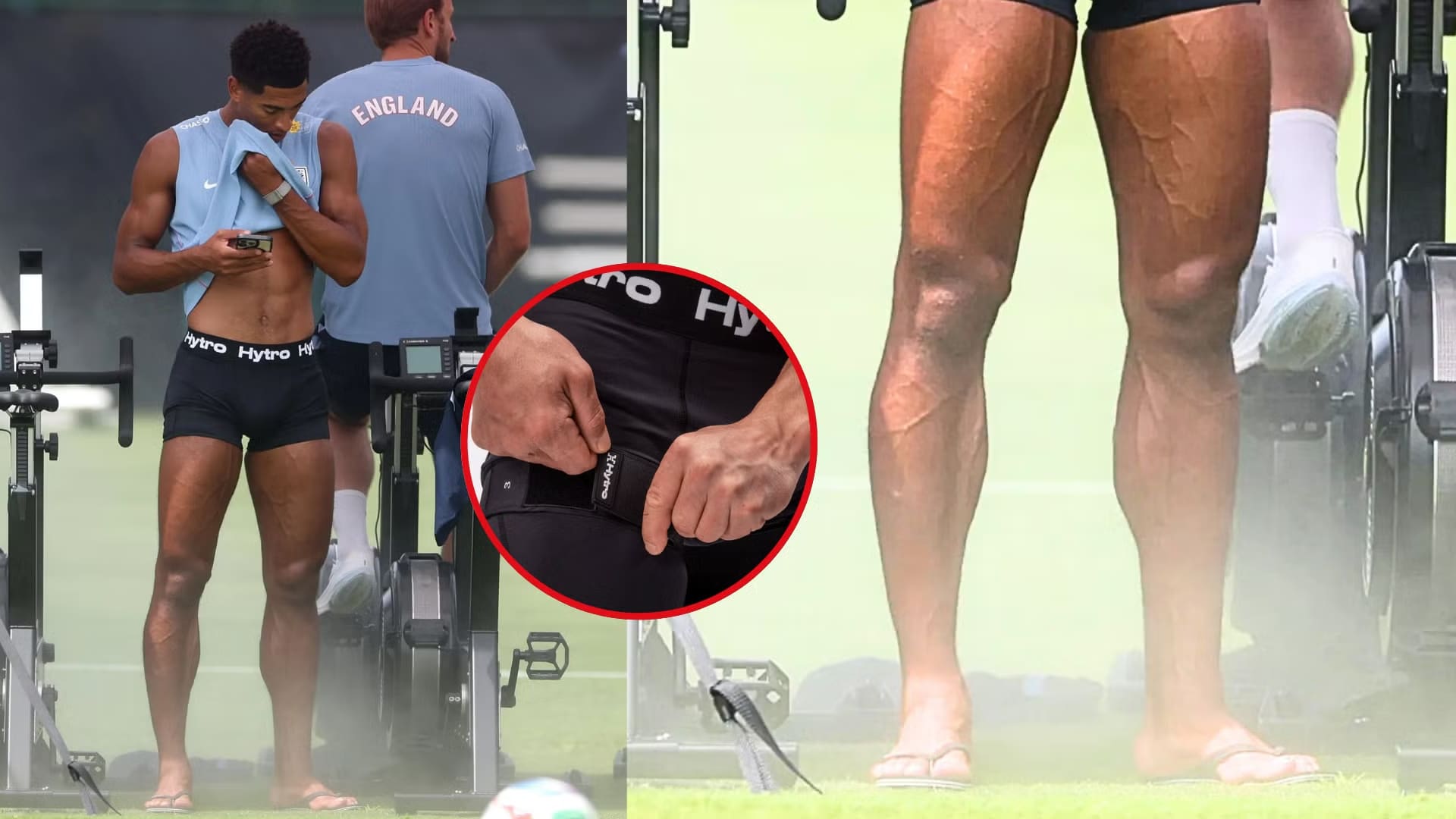
The internet is currently losing its mind over Jude Bellingham’s legs.
A picture of the England and Real Madrid star training has gone viral, with fans fixated on the frankly ridiculous network of veins running across his quads. But while the internet is busy discussing genetics, body fat percentages and whether Bellingham has ever skipped leg day, there may be another explanation for the particularly eye-popping levels of vascularity on display.
Look a little closer at Bellingham – as well as England teammates including Declan Rice and Bukayo Saka – and you’ll notice they’re wearing a distinctive pair of specialist shorts, with straps wrapped tightly around the very top of their thighs. They’re Hytro Blood Flow Restriction shorts. And England are using them as part of their training and recovery routines.
Why England Are Wearing Blood Flow Restriction Shorts
Blood Flow Restriction – or BFR – works by applying pressure to the top of the limbs, reducing the amount of blood leaving the working muscles. Oxygen-poor blood begins to pool, creating the sort of internal environment normally associated with much harder work. In plain English: light exercise suddenly asks a lot more of your muscles.
READ MORE: How to Maintain Muscle and Strength at Every Age
This is why BFR has traditionally been used to help build or maintain muscle while lifting lighter loads – useful when you want a serious muscular stimulus without piling even more load and stress onto already tired or injured joints and tissues.
Can BFR Really Improve Recovery?
But England’s players are also using the shorts for recovery. The specialist straps on the shorts allow athletes to perform structured bouts of passive restriction: strapping up and engorging the tissues with blood and restricting outflow creates localised metabolic stress that helps stimulate muscle protein synthesis. They’ve also been pictured combining BFR with easy cycling and other low-intensity work.
The idea is to support recovery and maintain physical qualities while keeping the actual load on the body low.
READ MORE: David Beckham on Turning 50, Staying Strong and Life After Football
This is a clever move in a major tournament where the players are no longer training for improvements, they’re at the thin end of the wedge putting all of that training to the test. They need to recover quickly, maintain muscle and arrive at the next match capable of producing another 90-plus minutes of sprinting, tackling and high-skill work, where soreness and under-recovery could be the difference between ‘it’s coming home’, and ‘we’ve been sent home’.
As for Bellingham’s roadmap-like pins? Genetics, elite-level conditioning and low body fat are undoubtedly doing plenty of the heavy lifting – pun fully intended. But trapping a load of blood in your thighs probably doesn’t hurt the look, either.
This article by Andrew Tracey was originally published by Men’s Health UK.