
We tend to judge how “good” we are in bed by how frequently we make our partner(s) orgasm. That’s not necessarily accurate—sexual pleasure is about way more than climaxing—but it can still be disappointing when you orgasm and your partner doesn’t. And it happens more often than many people realise (ever heard of the “orgasm gap”?).
When it comes to helping your female partner orgasm, the key is thinking beyond intercourse alone. Here’s why: Only 18 percent of women are able to orgasm through vaginal intercourse alone, according to a 2018 study in the Journal of Sex & Marital Therapy. More than one-third (36 percent) of vulva-owners need clitoral stimulation to orgasm during intercourse. Plus, an additional 36 percent of female respondents say that, while clitoral stimulation may not be necessary, their orgasms feel better if their clitoris is stimulated during intercourse.
So, if you want to help your partner climax—or make their orgasms even better than they already are—you gotta think beyond penetration. Try these 15 tips from sexual health experts:
How to Make Your Partner Orgasm
1. Understand how arousal leads to orgasm.
Here’s something you probably (definitely) didn’t learn in sex ed: how arousal works for people with vulvas. So, here’s a quick biology lesson: When a woman becomes aroused, blood flows to the clitoris, causing it to become engorged, says De-Andrea Blaylock-Solar, LCSW, a sex therapist in Olivette, Missouri. FYI: The clitoral glans (a.k.a. the small bud you can see) is made up of 10,000 nerve endings, while the rest of the clitoris (a.k.a. the internal wishbone-shaped structure) is made of erectile tissue, just like the penis. So, think of it becoming engorged similar to you getting an erection.
But that’s not the only thing that happens during arousal. The vagina also lubricates, the vulva becomes more sensitive to touch, and the vaginal canal lengthens and stretches in preparation for penetration. These are all critical steps on the path to pleasurable sex because if someone isn’t fully aroused before penetration, they’re more likely to experience painful intercourse, Blaylock-Solar says.
2. Don’t race toward climax.
“Try to remember the goal of sex is pleasure, and orgasm is one kind of pleasure that is significantly shorter than all the rest of it,” says Shadeen Francis, LMFT, a sex therapist in Philadelphia. That’s why she recommends slowing down.
Data backs this up, too: A 2020 study in the Journal of Sexual Medicine found that vulva-owners took roughly twice as long as penis-owners to reach orgasm during penetrative sex (an average of 12.76 minutes and 14.06 minutes, respectively).
But it’s not just about taking your time, it’s also about using your time wisely, which brings us to…
3. Focus on clitoral stimulation.
One more time for the fellas in the back: The vast majority of vulva-owners require clitoral stimulation to orgasm. So when you’re having sex, you want to focus on that nerve-dense nub first and foremost. You might think of this as foreplay (also key to arousal), but for many women/people with vulvas, clitoral stimulation is the main event.
In fact, women are more likely to orgasm when a sexual encounter includes deep kissing, fingering, and/or oral sex in addition to vaginal intercourse, per a 2017 study in the Archives of Sexual Behavior. So, it’s a good idea to keep paying attention to your partner’s clit even if/when you move on to some form of penetration. Here’s how:
Fingering
Blaylock-Solar recommends using a lubricated finger to stimulate the clitoris during foreplay or intercourse for additional pleasure. But if you think of fingering as finger banging, think again. Chances are, your partner will respond best to one or two fingers rubbing against the clit in a consistent rhythm (circles tend to work well), not two fingers pushing in and out of the vagina as fast and hard as possible.
READ MORE: Here’s How to Get Way Better at Fingering, According to Sex Experts
But why take the chance when you could take direction? “Communicate with your partner about their preferred speed and pressure of the touch,” Blaylock-Solar says. Checking in about what feels good can help make the experience more pleasurable for both partners, and it doesn’t have to sound like some after-school special. A simple “Like this?” or “More/less?” is a hot and effective way to make sure you’re making your partner feel good (the whole reason you’re here, right?).Shop Our Favorite Lubes
Oral Sex
Oral sex is one of the most effective ways to provide direct clitoral stimulation. But “cunnilingus is also a good way to stimulate the other sensitive areas of the vulva, including the inner labia and the external entrance to the vagina, which can create a layered sensory experience that many people find highly arousing,” sexologist Carolina Pataky, PhD, LMFT, previously told Men’s Health.
READ MORE: How to Make Oral Sex Better for Her, According to Sex Experts
Before using your mouth to pleasure your partner, use it to ask them what they enjoy and encourage them to guide you on the pressure, speed, or movements that feel best. Because every person’s preferences are different, checking in throughout the experience can help make it more pleasurable.
You can also let your partner take the lead and show you what feels good with a face-sitting sesh. They can adjust the pressure and angle of their body against your mouth, while you take in an amazing view. Just make sure to pay attention to your partner’s verbal and nonverbal cues, and use what you learn to better understand their preferences during oral sex and other types of stimulation.
3. Lube up.
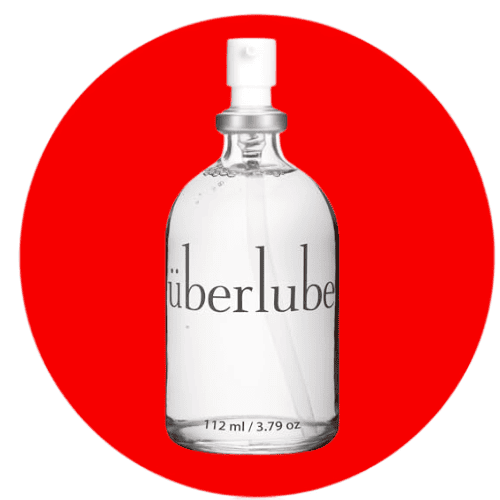
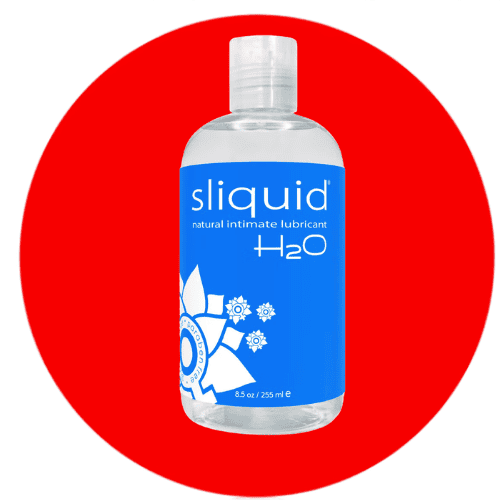
You might think you don’t need lube if your partner is adequately aroused, and yeah, you might be right. But you might also be wrong because needing lube doesn’t mean your partner isn’t turned on; some bodies just get wetter than others. “The reality is that women don’t always get soaking wet when they’re turned on,” sexologist Jessica O’Reilly, PhD, previously told MH. “A range of factors can affect vaginal lubrication including diet, hydration, medication, the menstrual cycle, menopause, overall health, and stress.”
READ MORE: Is Saliva Good Lubrication? Here Are Reasons to Avoid Spit as Lube
So, there’s nothing wrong with breaking out a bottle of the slippery stuff. Using lube makes sex more comfortable for everyone involved, but especially your vulva-having partner. Women reported less pain and greater sexual well-being when they used lube, according to a 2022 review in Sexual and Reproductive Health Matters. Just remember that if you’re using condoms, stick with water- or silicone-based lube, since oil-based lube can damage latex.
Shop Our Favourite Lubes
4. Opt for clit-stimulating positions.
If you want your partner to climax, have them climb on top. Cowgirl is “the position that’s most likely to lead to orgasm because a woman is really in control of the clitoral stimulation, pressure, and friction,” sex therapist Ian Kerner, PhD, previously told Men’s Health. “It’s a great position for a woman to get the angle just right in terms of how her clitoris is going to press into the base of a guy’s pelvis.” Other woman-on-top positions, like reverse cowgirl, also work well because they can expose the clitoris to more direct stimulation, while giving the vulva-owning partner greater control over the pace and angle of penetration, Blaylock-Solar adds.
READ MORE: 15 Kama Sutra Sex Positions for Beginners, Recommended by Sex Experts
Another option is the lotus position, which sex and relationships psychotherapist and author of Kink Curious Gigi Engle recommends because it encourages grinding rather than thrusting, increasing clit stimulation. While it requires more flexibility than cowgirl, it can be a good choice for couples who enjoy slower, more intimate movement.
Or, if you and your partner enjoy missionary, consider the Coital Alignment Technique (CAT), a variation on the classic position that “focuses more on clitoral stimulation than thrusting,” says Blaylock-Solar, “which could result in more orgasms for people with vulvas.”
Instead of the penetrating partner just thrusting away, both partners use a slow, synchronised rocking motion to maintain constant genital contact. CAT can be effective because it focuses on synchronicity with a partner, encourages slower pacing, and ultimately increases clitoral stimulation, Blaylock-Solar says, which can help those who don’t orgasm from penetration alone.
4 Best Sex Positions for Female Orgasm

How to: The giving partner lies flat on their back. Then, the receiving partner straddles the giver’s pelvis, lowering themselves down onto their penis or strap-on. From here, the receiver “rides” the giver.

How to: The giver lies on their back with their legs outstretched. The receiving partner then straddles the giver’s hips, facing their feet. From a kneeling position, the receiver lowers down onto the giver’s shaft/strap-on and begins riding.

How to: The giving partner sits down with their legs crossed. Then, the receiving partner lowers themselves onto the penetrating partner’s penis or dildo, wrapping their legs around the giver’s back. In-and-out thrusting might be a challenge in this position, but the receiver can grind and/or rock back and forth against their partner.

How to: The CAT is very similar to the missionary position, except the giver is positioned farther up and to one side. Instead of being chest to chest, the giver’s chest is near the receiver’s shoulders. The receiving partner should bend their legs about 45 degrees to tilt their hips up. This causes the base of the giver’s shaft to maintain constant contact with the receiving partner’s clitoris.
5. Keep kissing them.
Once things start to get heated, you might be tempted to focus less on kissing in favor of penetrative sex. But remember how we said people with vulvas are more likely to orgasm when their sexual encounters include deep kissing? Yeah, do that.
Some sex positions also make it easier to maintain that face-to-face intimacy throughout sex, says Blaylock-Solar. “Side-by-side positions can create opportunities for eye contact, kissing, and other touching.”
6. Focus on their neck, too.
While you’re kissing your partner, allow your mouth to head down south. The neck can be an especially sensitive erogenous zone because the skin is thin and packed with nerve endings. Research has found that light touch in this area can heighten arousal for many people.
Before exploring sensitive areas like the neck, talk with your partner about what they enjoy—and what they don’t, says Blaylock-Solar. “Ask before touching a new area and pay attention to body cues.” For example, a soft kiss or caress along the neck may be welcome, but a tighter hold is not. She also recommends discussing likes, dislikes, and sensitivities in low-pressure environments before becoming intimate, so both partners feel comfortable communicating their boundaries.
7. Indulge their fantasies.
A pre-coital convo is also a good time to discuss exploring each other’s sexual fantasies. Having the conversation ahead of time gives each person space to be honest about what they’re curious about, what they’re comfortable with, and what their boundaries are.
Once you’ve talked it through and you’re both on the same page, bringing a shared fantasy into the bedroom can increase arousal during a sexual experience, says Francis. “Finding a fantasy that really turns your partner on can add another layer of pleasure during sex.”
It’s also a way to get your partner more psychologically aroused, which is just as important (if not more so) than physical arousal when it comes to helping your partner orgasm. This is particularly true for women with lower sexual desire because they tend to require mental arousal in order to recognise their physical arousal, according to a 2019 study in the Journal of Sex & Marital Therapy. To indulge your partner’s fantasies, try role-playing, reading an erotic novel, or listening to audio erotica together.
8. Talk dirty to them.
“Dirty talk” can also build mental arousal, creating anticipation and helping partners feel more connected, says Blaylock-Solar. “Although it can absolutely feel intimidating, dirty talk can be a fun addition to your sexual practices.” If you’re not sure where to start, keep it simple. Blaylock-Solar recommends low-pressure, simple phrases such as, “I like how you’re touching me,” or “I love how this feels” until you build your own steamy repertoire.
9. Break out the sex toys.
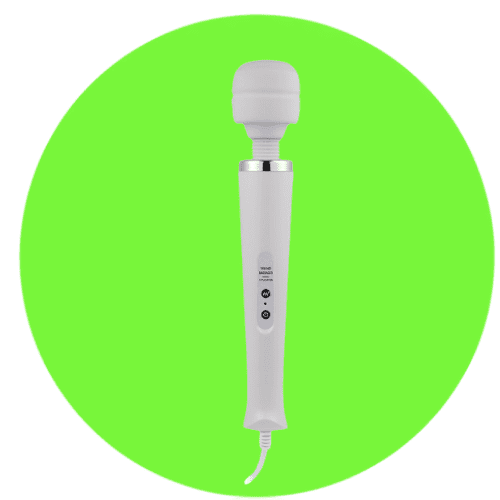
You can’t build a house without a hammer, and for many people with vulvas, a vibrator is one of the most reliable tools for reaching orgasm. In fact, women who used sex devices during partnered sex reported higher arousal, greater satisfaction, and more intense orgasms than those who used them only during solo sex, per a 2025 study in The Journal of Sexual Medicine.
“Vibrators aren’t a replacement for partnered sex; they’re simply another tool that can enhance pleasure,” Blaylock-Solar says. During penetrative sex, for example, your partner can hold a vibrator against their clitoris to enhance the experience.
“Some vibrators are even designed to be used during penetrative sex by providing clitoral stimulation [and] are made to fit comfortably between partners,” Blaylock-Solar says. “Others are great for outerplay and foreplay before penetration.” For example, if your hand or mouth gets tired, a toy can provide a welcome assist. But as always, check in about pressure, speed, and placement so you can adjust based on what feels best for your partner.
Best Vibrators for Couples

Best Vibrator for Penetrative Sex
Best Vibrator for Outerplay
10. Let your partner take matters into their own hands.
Remember that sexy scene from Off Campus? Okay, you don’t, but your girl probably does. The point is, mutual masturbation is hot—and can help your partner orgasm. “Often, sex with a partner comes with pressure to perform. However, mutual masturbation can present an opportunity to learn about the type of touch your partner enjoys while removing that pressure,” says Blaylock-Solar.
READ MORE: 12 Best Masturbation Techniques for Men, According to Sex Experts
She recommends bringing this idea up outside the bedroom so you can explore any thoughts or anxieties, and discuss what you both hope to gain from the experience. If your partner enjoys exhibitionism, you can even offer to watch them masturbate with their hands or their favorite toy. Make sure you’re taking mental notes on the ways they like to be touched.
11. Bring nipples into the action.
Don’t underestimate the power of some nipple play when you’re looking to give your partner an earth-shattering orgasm. Believe it or not, nipple stimulation can activate the very same region of the brain that genital stimulation does, per a 2019 study in SexuS Journal.
“The nipples, brain, and genitals actually end up ‘talking to each other’ during nipple play, using the spinal cord as a messenger system,” says Engle. “A message is sent to the brain that the nipple stimulation feels good, and the brain then sends a corresponding message about that pleasure to the genitals. Thus, the clitoris becomes engorged, the labia swell and the vagina becomes lubricated.” Some—but not all—vulva owners can actually orgasm from nipple play alone, she adds.
Before you go abruptly reaching for your partner’s breasts, keep in mind that not everyone enjoys nipple play—and while some people like rougher play, that’s not universal either. “Ask what kind of nipple contact they’ve liked or not liked in the past,” says Engle. “Or, ask them about any fantasies they have involving their breasts and nipples.”
Engle also advises starting out super gentle—for instance, by gently stroking or kissing around the top or sides of their breasts. From there, you can start lightly caressing or licking around their nipples before moving to direct contact with them.
12. Stimulate the G-spot.
Ahh, the elusive G-spot. While the exact location can vary from person to person, “the G-spot is best understood as an area of heightened sensitivity on the front wall of the vagina, typically a few inches inside the vaginal opening,” says Katie Schubert, PhD, a sex therapist in St. Petersburg, Florida. “Rather than being a distinct anatomical ‘button,’ many researchers believe it’s part of a broader network of erectile tissue, nerves, and the internal portion of the clitoris and surrounding structures.”
When a vulva owner is aroused, it might swell up—and for some, G-spot stimulation can lead to a vaginal orgasm and even squirting (yes, that’s a real thing!). Others may not find G-spot stimulation pleasurable or may prefer external clitoral stimulation. But hey, you’ll never know until you ask.
READ MORE: If Doggy Style Is Your Favourite Sex Position, You Need To Try These 12 Variations
If your partner enjoys some G-spot action, use a “come hither” motion with your finger inside the vagina to locate the area. You’ll know you’ve found it when you feel a different, spongier texture than the surrounding tissue. Then, keep making that “come hither” motion to stimulate the G-spot. But word to the wise: Foreplay is key before diving into this approach. Many people find deeper internal stimulation more pleasurable after they’ve had enough time to become fully aroused.
And if you want to stimulate the G-spot during penetrative sex, doggy style and other rear entry positions are also stellar options, says Schubert, because of the thrusting angle.
13. Ask your partner what they want.
Starting to sense a theme here? At this point, it might seem painfully obvious, but asking your partner exactly what they enjoy is one of the best ways to help them orgasm. Studies have shown that people who are more comfortable talking about sex tend to have more satisfying sexual experiences because they feel less anxious between the sheets.
Outside the bedroom, in a low-pressure environment, “use open-ended questions, and consider sharing your answers first to encourage your partner to share,” says Blaylock-Solar. For example, you might ask, “What do you enjoy most about our current sex life? Would you like me to do more of that?” or “Is there anything we haven’t done that you’d like to try?” Listening without judgment can help your partner feel more comfortable sharing their preferences, fantasies, and boundaries—which can ultimately lead to more satisfying sex for both of you.
14. Encourage feedback.
Now, you have a variety of techniques and positions to try, but remember: There’s no one-size-fits-all formula to helping someone orgasm. What feels amazing to one person may do nothing for another, which is why communication matters. Blaylock-Solar recommends using quick check-ins during sex, such as “How does that feel?” or “Do you want more like that?”
You should also pay attention to your partner’s nonverbal cues, including changes in breathing or muscle tension. “When you notice a shift, it’s okay to ask about it,” Blaylock-Solar says.
Then, after sex, instead of asking, “Was it good?” try more specific questions such as, “What did you like?” or “What part was your favorite?” That’ll give you valuable feedback you can incorporate next time.
15. Take the pressure off orgasming.
We know—this is a guide all about how to achieve an orgasm. It’s easy to think that climax is the ultimate measure of a successful sexual experience, but that’s the wrong way to look at it, according to Blaylock-Solar. “Orgasms are not a barometer of pleasure,” she says. “They’re wonderful, for sure, but they are not necessary for good sex to occur.”
READ MORE: This Is How You Can Do the Prone Bone Sex Position, According to Sex Experts
Placing too much emphasis on orgasm can make both partners feel an added pressure to perform, Blaylock-Solar adds. One may feel like they have to orgasm (and if they can’t, fake it), while the other may feel like a failure if they don’t do enough to make their partner orgasm.
Ultimately, “it’s important to understand that orgasms are sudden releases of pressure that cannot always be controlled,” says Blaylock-Solar. That doesn’t mean you should just go through the motions. Instead, Blaylock-Solar encourages couples to prioritize pleasure over performance and keep communicating about what they want from their sexual experiences.
Meet the Experts
- De-Andrea Blaylock-Solar, LCSW, is a sex and relationship therapist in Olivette, Missouri.
- Shadeen Francis, LMFT, is a sex therapist in Philadelphia.
- Gigi Engle is a sex and relationships psychotherapist and the author of Kink Curious.
- Katie Schubert, PhD, is a sex therapist in St. Petersburg, Florida.
This article by Cori Ritchey, C.S.C.S., Ro White, Rebecca Strong was originally published on Men’s Health US