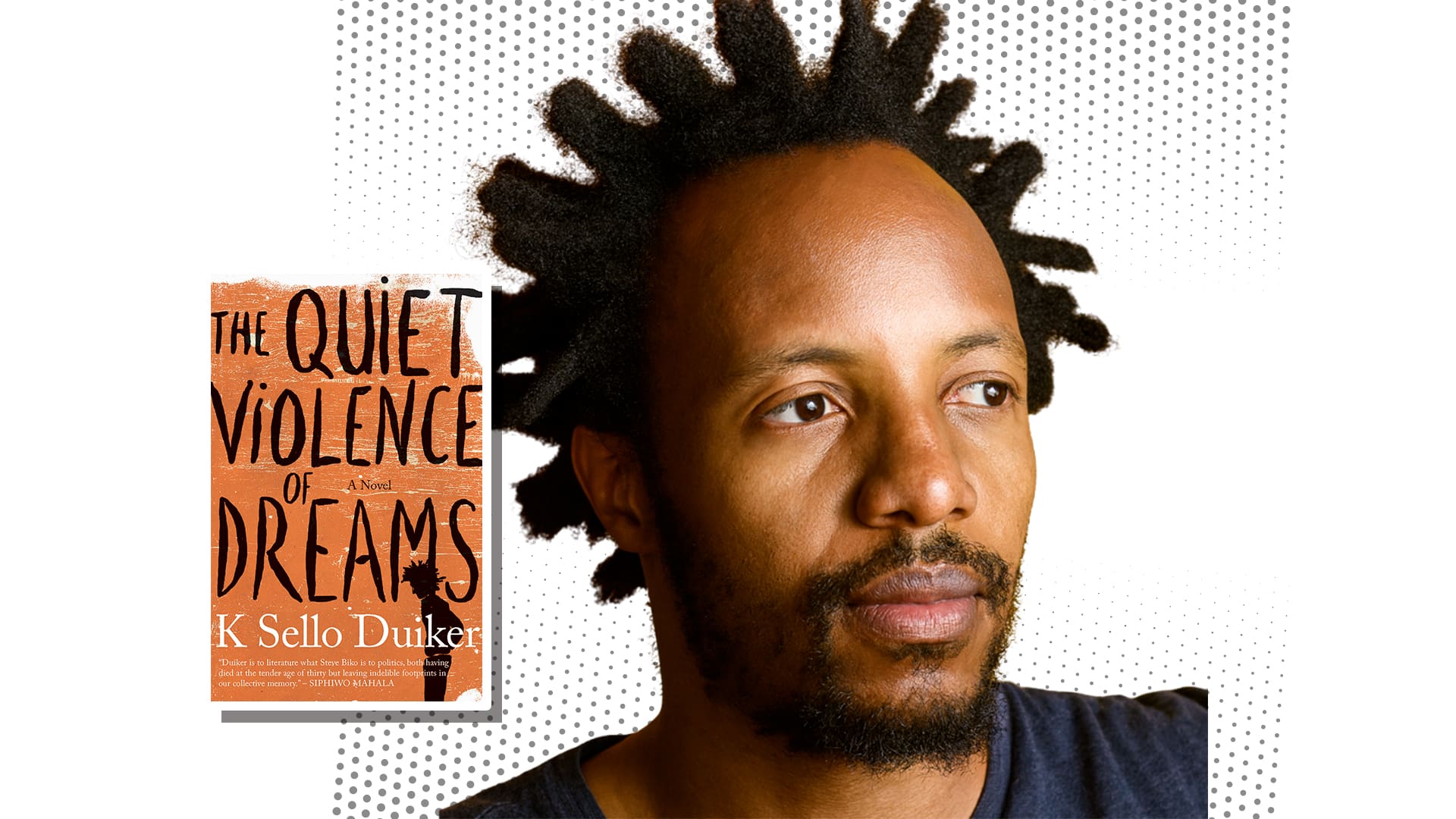
Some books meet you where you are. Others force you to confront parts of yourself you would rather ignore. The Quiet Violence of Dreams falls firmly into the second category.
From the opening pages, K. Sello Duiker makes it clear that this is not going to be a comfortable reading experience. There is no slow easing into the story, no gentle build. You are dropped into Tshepo’s reality at a point where things have already unravelled and from there, the novel asks you to piece together not just what happened, but what it means.
Reading it feels less like following a narrative and more like tracing a psychological map. You move through confusion, clarity, contradiction and back again. By the time you find your footing, you realise that instability is the point.
What This Book Is Really About
At its core, the novel follows Tshepo, a young Black man trying to reconstruct his identity after a mental breakdown. His story begins in a psychiatric institution, which immediately frames the narrative through the lens of mental health and recovery.
Once he leaves, he navigates life in Cape Town, moving between different environments and versions of himself. His eventual work at a massage parlour becomes one of the book’s most defining elements, not because of shock value, but because of what it reveals about power, vulnerability and self perception.
But reducing the novel to its plot does not do it justice. The Quiet Violence of Dreams is not driven by action. It is driven by introspection. Duiker is exploring what it means to exist in a body and a society that both place expectations on you. Tshepo is constantly negotiating who he is, who he is expected to be and who he wants to become.
Why It Demands Your Attention
This is not a book you skim. It demands presence. There are moments where the writing feels almost disorienting, where Tshepo’s thoughts loop and overlap in ways that reflect his internal state. That lack of linearity can feel challenging at first, but it becomes one of the novel’s greatest strengths.
READ MORE: What A Little Life Reveals About Male Friendships and Emotional Pain
You are not just reading about Tshepo’s experience. You are experiencing it with him. The pacing reflects this as well. Some sections move quickly, then others slow down, forcing you to sit in a particular moment or idea. That rhythm mirrors the unpredictability of real thought and emotion. It is this immersion that makes the novel powerful, but also why it can take time to move through.
Mental Health Without Simplification
One of the most important aspects of the novel is its portrayal of mental health. Duiker does not treat Tshepo’s breakdown as a plot device that can be resolved and moved past. It is foundational to who he is. His time in the psychiatric ward lingers throughout the narrative. It shapes how he sees himself, how he interacts with others and how he interprets his experiences. There is no clean recovery arc here. No moment where everything clicks into place.
Instead, progress is uneven. Tshepo has moments of clarity, followed by confusion. Moments of confidence, followed by doubt. This reflects a more realistic understanding of mental health, one that resists easy categorisation. For a Men’s Health reader, this feels especially relevant. There is often pressure to present mental resilience as something fixed and visible. But Duiker suggests that resilience can be quiet, internal and at times, barely perceptible.
Masculinity, Rewritten
The Quiet Violence of Dreams also challenges traditional ideas of masculinity in a way that still feels progressive. Tshepo’s experiences, particularly in the massage parlour, force him to confront aspects of his identity that do not align with conventional expectations of what it means to be a man.
His sexuality is not presented as something static or easily defined. It shifts, it confuses him, it pushes him into spaces that are both uncomfortable and revealing. What makes this portrayal effective is its refusal to simplify. There is no clear label, no final declaration of identity. Instead, masculinity is shown as fluid, shaped by experience rather than dictated by rigid norms. This stands in contrast to more traditional narratives where masculinity is tied to control, dominance or emotional restraint. Here, vulnerability is not a weakness. It is central to Tshepo’s journey.
The Role of Cape Town
Cape Town is more than a setting in this novel. It is a reflection of the tensions that define the story. There is a visible contrast between beauty and inequality, between freedom and limitation. Tshepo moves through different parts of the city, each one exposing a different layer of South African society.
READ MORE: Why Ocean Vuong’s Writing on Life, Loss and Belonging Matters
Race and class are ever present, influencing how characters interact and how spaces are navigated. The city becomes a backdrop that reinforces the novel’s themes, reminding the reader that personal identity does not exist in isolation. It is shaped by environment, history and access.
Discomfort as a Tool
There are scenes in the novel that are difficult to sit with. That is intentional. Duiker does not soften the edges of his story. He allows moments to unfold fully, even when they are uncomfortable or confronting. This creates a reading experience that is at times intense, but always purposeful.
The discomfort forces engagement. It prevents passive reading and instead demands that you reflect on what you are consuming. In that sense, the novel functions almost like a mirror. It does not just show you Tshepo’s world. It pushes you to consider your own assumptions and biases.
Identity and Control
A central tension in the novel is Tshepo’s relationship with control. Throughout the story, he moves through environments where power dynamics are constantly shifting. His work at the massage parlour, in particular, places him in situations where he must navigate boundaries, agency and survival.
His body becomes a focal point of this tension. It is both a source of vulnerability and a means of asserting control. This duality runs throughout the novel. Tshepo is searching for stability, for a sense of self that feels grounded. But that search is complicated by the external pressures he faces and the internal conflicts he carries. The result is a narrative that resists resolution. Identity is not something Tshepo arrives at. It is something he continues to negotiate.
Is This a Book Everyone Should Read

Not necessarily.
The Quiet Violence of Dreams is not designed for easy consumption. It is emotionally demanding and at times unsettling. It requires a willingness to engage with complex themes without expecting clear answers.
For some readers, that may be overwhelming. But for those willing to sit with the discomfort, the novel offers something valuable. It provides insight into aspects of masculinity and mental health that are often overlooked or simplified.
It is a book that stays with you, not because it entertains, but because it challenges.
What Stayed With Me After the Last Page
What lingered most after finishing the novel was not a specific scene, but a shift in perspective. Tshepo’s story reframes what strength can look like. It moves away from external markers and instead focuses on internal processes. Self-awareness. Reflection. The willingness to confront difficult truths. These are not qualities that are always visible, but they are essential.
READ MORE: Depression Symptoms for Men, According to Therapists
The Quiet Violence of Dreams suggests that growth is not always loud or obvious. Sometimes it happens quietly, in moments of introspection and uncertainty. That idea feels particularly relevant today. We are often encouraged to present ourselves as stable, confident and in control. But this novel reminds us that there is value in acknowledging complexity. In accepting that identity is not fixed and that understanding yourself is an ongoing process. It is not an easy read. It is not meant to be. But it is an important one.