
I finished A Little Life eight weeks after I started it and that feels important to say upfront. This is not a novel you breeze through. It is not something you casually read before bed or knock out on a quiet weekend. Reading Hanya Yanagihara’s modern classic felt more like emotional endurance, the literary equivalent of holding your breath for long stretches and only occasionally coming up for air.
When I finally closed the book, I felt wrung out, emotionally flattened and strangely quiet. Not relieved. Not satisfied. Just still. That, more than anything, defines A Little Life. It leaves you changed, but not in a neat or inspirational way.
What This Book Is Really About
On the surface, A Little Life is about friendship. It follows four men who meet at university and move to New York to build adult lives shaped by ambition, art, architecture and law. Willem Ragnarsson, Jude St Francis, Jean-Baptiste Marion (JB) and Malcolm Irvine begin as young men with limited money but enormous closeness. They share apartments, meals, jokes and the kind of shorthand that only comes from deep familiarity.
READ MORE: Why Ocean Vuong’s Writing on Life, Loss and Belonging Matters
But to describe the novel as a story about friendship is also misleading. Friendship is the framework, not the core. What Yanagihara is really examining is pain. How it forms early. How it embeds itself. How it reshapes a person’s relationship with their body, their worth and their capacity to accept love.
At the centre of the novel is Jude St Francis, a character written with such detail and restraint that he often feels more real than fictional. Jude is brilliant, disciplined and outwardly successful. He is also carrying a history of trauma that refuses to stay in the past.
Why It Took Me Eight Weeks to Finish
There were long pauses in my reading. Sometimes days. Sometimes more than a week. Not because the writing was slow or indulgent, but because it was relentless. Trauma in A Little Life does not arrive once and resolve itself. It accumulates. It resurfaces. It mutates.
As a reader, you are asked to sit with that discomfort without the promise of relief. There are moments of tenderness, even joy, but they never erase what came before them. Instead, they sit alongside the pain, sharpening it by contrast. This makes the novel deeply triggering at times and it demands honesty about that. Yanagihara does not write with the reader’s comfort in mind. She does not cushion the consequences of suffering or offer easy explanations.
There were moments when I questioned whether I wanted to continue. Not because the book lacked quality, but because it was too effective at making suffering feel intimate and inescapable.
The Men and the Masculinity at the Centre
A Little Life is particularly compelling in how it portrays masculinity without armour. These men cry. They depend on one another financially and emotionally. They love fiercely and imperfectly.
Willem Ragnarsson represents a version of masculinity that is rarely centred. He is gentle, emotionally available and unwavering in his care for Jude. His love is not loud or performative. It is patient and consistent, even when it costs him.
Jean-Baptiste Marion, or JB, is creative, ambitious and sometimes reckless, a man whose charm hides insecurity and who struggles to balance genius with humility. Malcolm Irvine is thoughtful and methodical, the quieter observer who often mediates conflict but carries his own limitations.
Together, these four men form a bond that is both protective and sometimes fragile, showing the complexity of adult friendship. The novel challenges the idea that strength is simply about endurance. Jude endures more than anyone should, but endurance alone does not save him. What the book suggests, often painfully, is that survival and healing are not the same thing.
Friendship as Lifeline and Limitation
One of the most devastating elements of A Little Life is how deeply Jude is loved and how insufficient that love sometimes feels against his internal reality. His friends rally around him. They advocate for him. They reshape their lives to make space for him.
READ MORE: Daddy Issues: A Compelling Tale of Healing, Transformation, and Resilience
And yet, there are limits to what love can repair. This is not an indictment of friendship. It is an honest portrayal of its boundaries. We often believe that if someone is loved enough, they will eventually heal. A Little Life dismantles that belief.
The novel shows that connection can exist alongside unbearable internal pain and that being surrounded by people does not automatically translate to feeling safe within your own body.
The Writing and Why It Works
Yanagihara’s prose is immersive and meticulous. She lingers on domestic details, shared meals, cramped apartments and daily routines. These moments ground the story and make the emotional weight feel earned rather than sensational.
The apartment hunting scenes, the cheap meals in Chinatown, the shared living spaces capture something universal about early adulthood. That period where everything feels provisional, where money is tight and where friendship fills the gaps left by uncertainty.
These quieter moments make the novel’s darker turns hit harder. Nothing feels rushed. The length of the book is deliberate. Trauma is not something you resolve quickly. It stretches across years. It reshapes entire lives.
Is This a Book Everyone Should Read
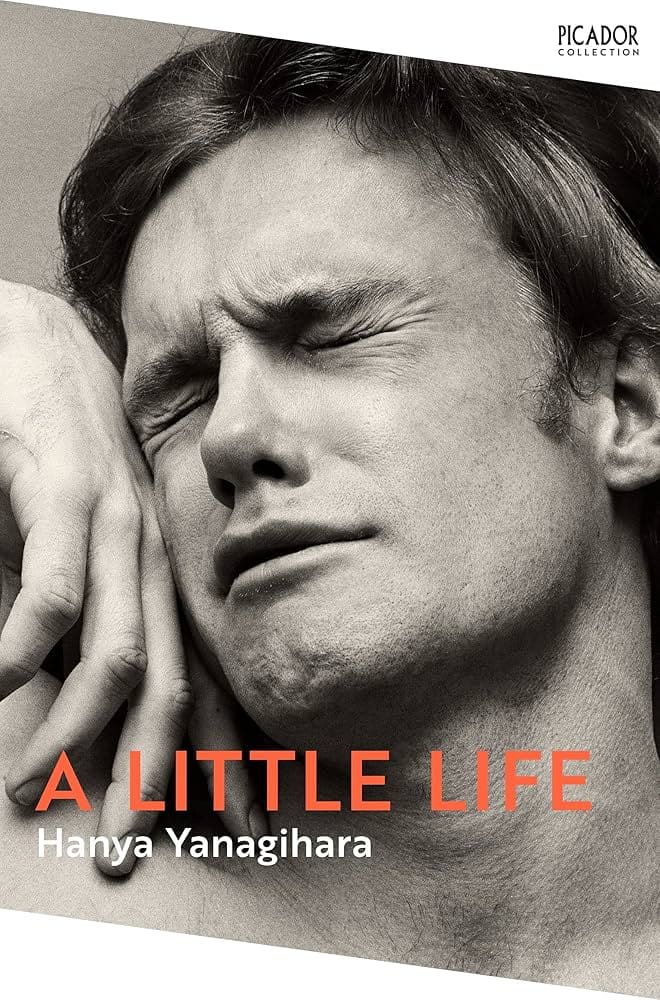
That depends on what you are ready for. A Little Life is not a book I would casually recommend to everyone. It is emotionally heavy and psychologically demanding. It requires a level of self-awareness from the reader and it benefits from being approached slowly.
If you are in a vulnerable mental space, this is not a novel to power through out of obligation.
But if you are prepared for a challenging reading experience, one that refuses to look away from suffering or simplify recovery, this book is unforgettable.
It does not offer comfort wrapped in optimism. It does not insist that everything happens for a reason. Instead, it offers honesty, however uncomfortable that honesty may be.
What Stayed With Me After the Last Page
After finishing A Little Life, I found myself thinking differently about the people around me. About what we can see and what remains invisible. About how often we mistake functionality for wellness. Jude is successful by every external measure. He works hard. He shows up. He contributes. And yet, none of that protects him from himself. That idea lingers long after the final page. It forces a reckoning with how we define care, strength and responsibility.
READ MORE: Depression Symptoms for Men, According to Therapists
Reading A Little Life felt like consenting to emotional exposure. It took me eight weeks because I needed distance to process what I was absorbing. This is not a book you conquer. It is one you survive. I am glad I read it. I am not sure I could read it again. And maybe that is exactly the point.