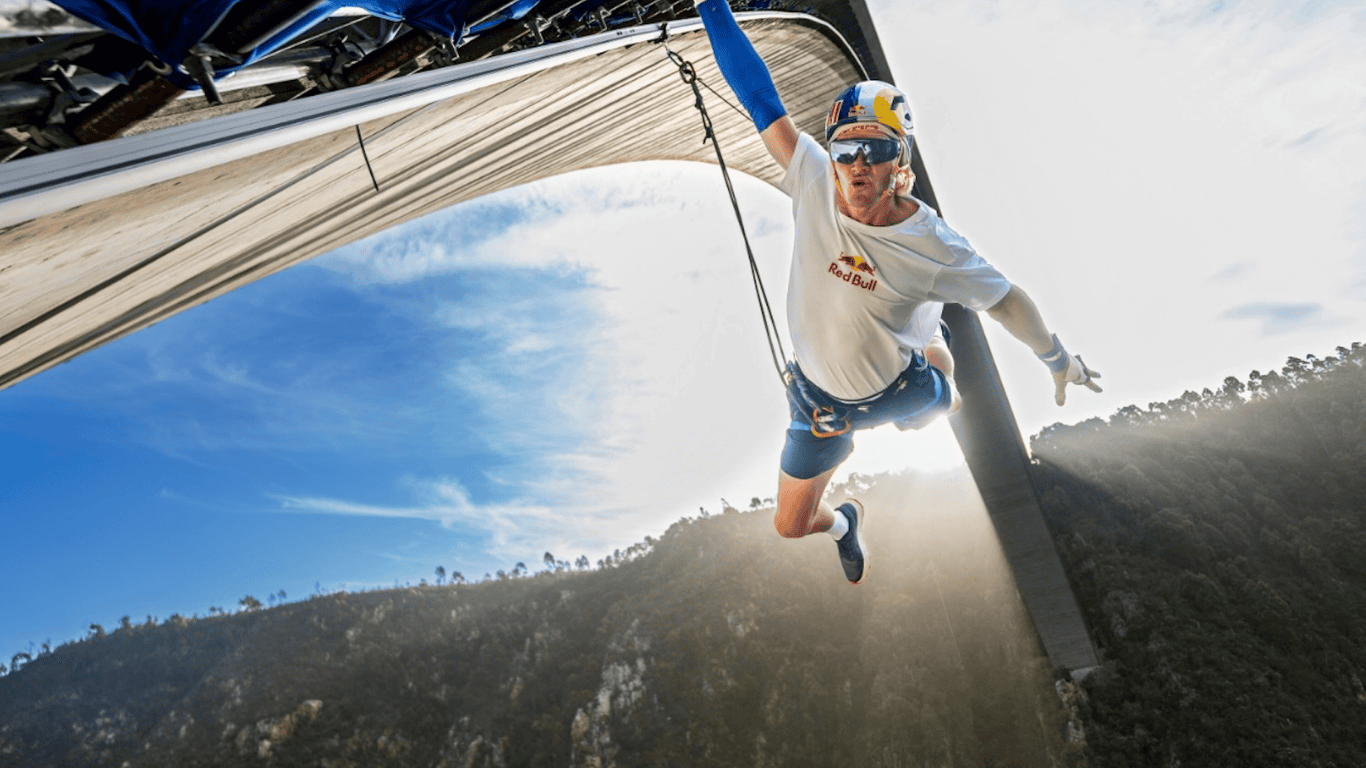
South African obstacle course racing world champion Thomas van Tonder completed a world first on the Bloukrans Bridge, crossing 600 suspended monkey bars beneath the arch in one continuous attempt.
The Bloukrans Bridge hangs 216 metres above the river on South Africa’s Garden Route. On 26 October, Red Bull athlete Thomas van Tonder crossed beneath its arch using only his hands, moving along 600 monkey bars that followed the bridge’s steep climb, short flat section and descent.
The attempt was called Red Bull Bridge Bars. Red Bull described the course as more than 280 metres long and the longest monkey bars ever built. In his post-challenge interview, Van Tonder gave the distance as 290 metres, with 61 metres of vertical gain. The bridge links the Western Cape and Eastern Cape on the N2 and is home to Africa’s highest bridge bungee jump, one of the highest commercially operated jumps in the world. “I just completed one of my biggest dreams and missions for the last two years,” Van Tonder said. “We actually made it to the other side.”
A Steep Start Beneath the Arch
The course began with its steepest section. The arch starts at a 45-degree angle, so Van Tonder could not face forward. He turned his back to the bars, pulled himself up and reached for each bar in turn as the bridge rose above him. He started at 10:21 in a light breeze, with the crew watching and waiting. “All that is left to do are the bars,” he said. His heart rate was already at 150. By 10:34, the strain was showing. “Hands are not feeling great.”
RELATED: Thomas van Tonder Takes On 600 Monkey Bars Beneath Bloukrans Bridge
Van Tonder had expected the climb to be the hardest part. Even with extensive training and simulations, the incline placed a continuous load on the same muscle groups. “It over-delivered,” he said. “We simulated and trained as much as we could, but nothing can really compare to just the continuous beating that that incline puts on the same muscle group.”
He later said he had underestimated both the length and difficulty of the challenge. His simulations usually lasted about 30 minutes. When he reached the 30-minute mark on the bridge, he was only about halfway across. “That was one of the big moments where I realised I am now out of my depth and I’m gonna find some way to push to the finish,” he said.
Ten Years of Preparation, and One Difficult Six Months
For Van Tonder, preparation for a challenge like this began well before the bridge. He described the last ten years of his journey as an obstacle racing athlete as a period of learning and personal growth that helped him become someone who dreams up challenges like this.
The planning and technical work for Bridge Bars took more than a year. The team had to work out how to build the course and whether the attempt was even possible. Van Tonder’s focused physical preparation lasted six months. He said he would have preferred more time, but other competitions and commitments were in the way, and the team wanted to use the weather window at the bridge.
“Six months is a lot, but it’s not that much,” he said. The preparation changed him physically, but he also valued the experience of working with the wider team. He estimated the project team at about 160 people, including the livestream and rigging crews. “Everyone pushing each other to really bring the best out in each other, like, that’s been so cool to me,” he said. “I feel like this project has been special, not just because I’m pushing myself, but everybody gets pushed and forced themselves to grow.”
RELATED: Lohan Swart and Iana Strydom Win the First-Ever Red Bull Agri-Grit
Training brought several setbacks. Van Tonder said he pulled a muscle in his neck and another in his back, developed tendinitis in his right elbow and had a shoulder strain. Conditioning his shoulders and elbows became important to help him avoid injury and reach the attempt. One of his training methods was a bucket of rice. He used it to move his wrists and fingers against resistance in different directions and ranges of motion, and said it also helped condition his shoulders. He had discovered the method through climbers.
“It’s been more of a recovery, active recovery and conditioning method,” he said. He stressed that the rice bucket was one part of a wider preparation plan, rather than a single solution. “You can’t single out one piece of all the training stuff. It really is a collective thing, trying to tick all the boxes.”
The Mental Challenge at the Crown
At the crown of the arch, the course flattened out and the challenge changed. Van Tonder was hanging at his highest point, with the rest of the bars in front of him. Finding a rhythm became difficult, and his hands struggled to keep closing around each bar. “I’d say that was, to me, the mentally toughest part,” he said. “I found it really difficult to get any rhythm. The hands just didn’t do what I in my mind thought they would be able to, just keeping them closed was so hard.”
Looking at the finish made the remaining distance feel daunting. “If you look at the finish, it’s so far out of reach and there’s so many bars in between. It seems undoable.” Instead of focusing on the end, he set small goals. He picked a point ahead and said aloud that he was aiming for it. During the attempt, he told Richard Lievaart, the head of rigging and safety, which point he planned to reach next.
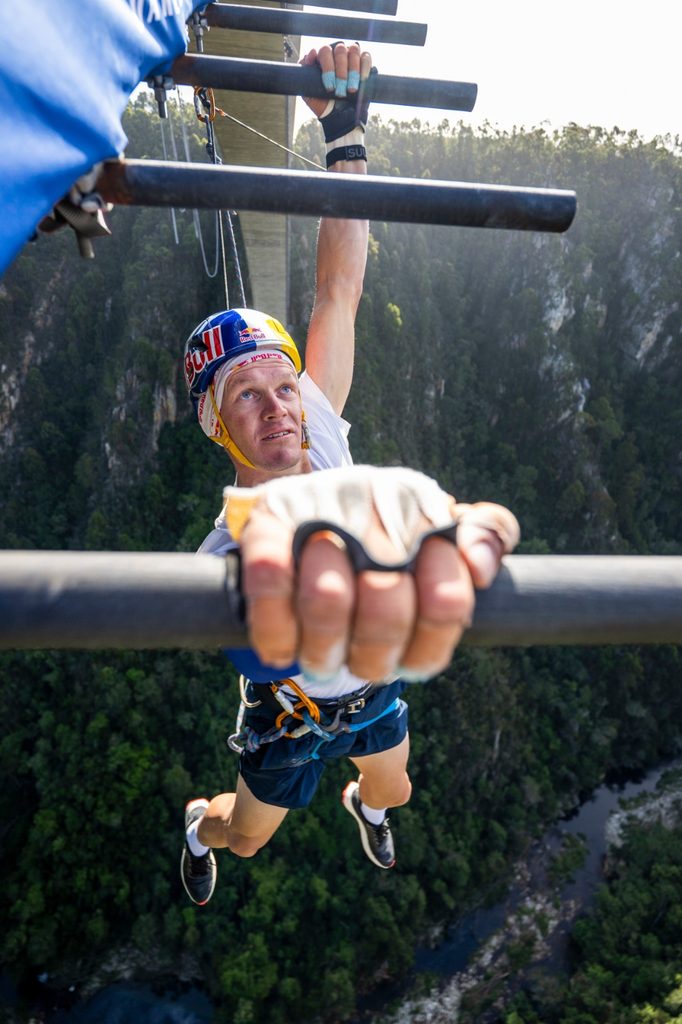
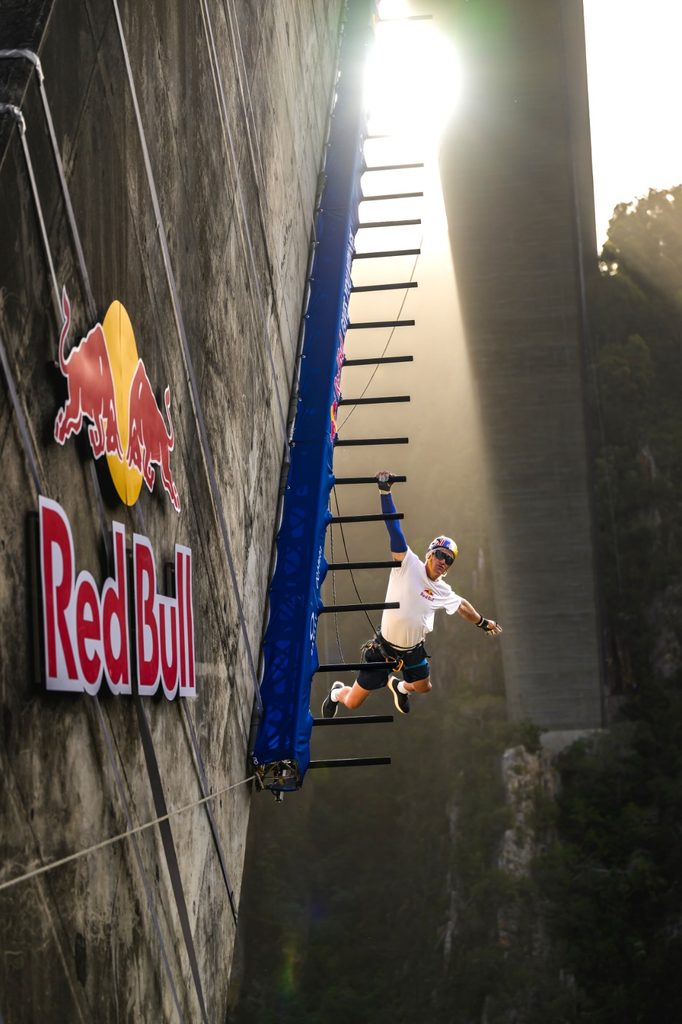
Van Tonder also had to manage the effects of hanging upside down. During one shake-out, his head began to throb. He realised he needed to turn upright because he might faint if he stayed in that position. His hands had to carry him back up. “Just trusting myself that they would, and they did,” he said.
Fellow Red Bull athlete Stefan Glowacz, the German climber and extreme alpinist, taped Van Tonder’s hands before the start and watched the crossing. When the middle section changed angle, Glowacz could see the difficulty increase. “Wow, this is getting tough now,” he said. “The angle change made a big change, for sure.” By the descent, he was concerned. “I was a little bit worried because it didn’t look very, very solid there.”
The Descent, the Final Bars and the Finish
On the descent, gravity pulled Van Tonder down the course. He had to slow his movement, catch each bar and keep the speed from tearing his hands away. “The fatigue was way past what I expected it to be,” he said.
Van Tonder was mic’d up for the livestream, so viewers could hear him speaking with Lievaart and encouraging himself throughout the attempt. He said there were moments when he had to remind himself he could keep going, especially from the middle of the bridge through to the final quarter. His hands were close to failing, and he had to balance giving them time to recover with staying upright because his heart rate was high and he felt dizzy when hanging.
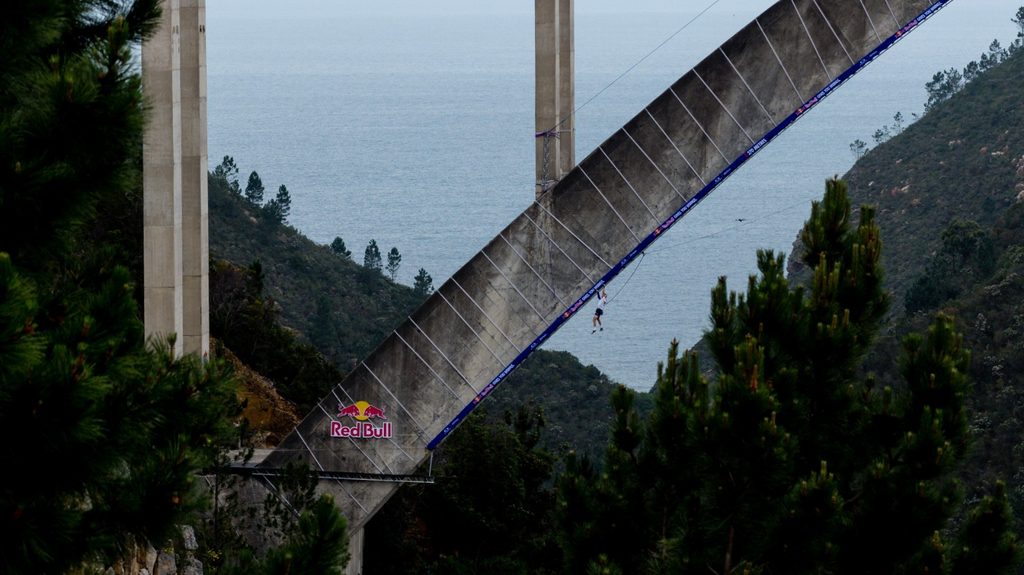
Belief came late, when the finish was about 20 metres away and he could see his family and hear the crowd cheering. Before then, he said, “The rest of it was a fight.” His focus narrowed to each bar. “Make sure, make sure, make sure, make sure every single bar,” he recalled telling himself. He was worried about slipping, a glitch or missing a bar. The tape on his fingers had been ripped through.
“At least I can close them again now,” he said. “Yeah, they hurt.” Van Tonder said the bridge had humbled him. He chose the arch because he did not know whether he could complete the challenge. “This is by no means something I know I can do, which means it’s the right challenge,” he said.
When asked when he began to feel that he had the attempt under control, he said it was probably in the last 20 metres. He also described seeing his family at the finish as a source of encouragement. “You just find this another gear,” he said. “Afterwards you don’t know how, but it’s possible to do more than you think.”
A Team Effort, Built Around Safety
The challenge required a course that could be installed without drilling into or bolting anything to the bridge. Lievaart and the rigging team used two independent safety points and no permanent fixings. Van Tonder said members of the team worked through the night to prepare the bridge and stayed on site to keep him safe.
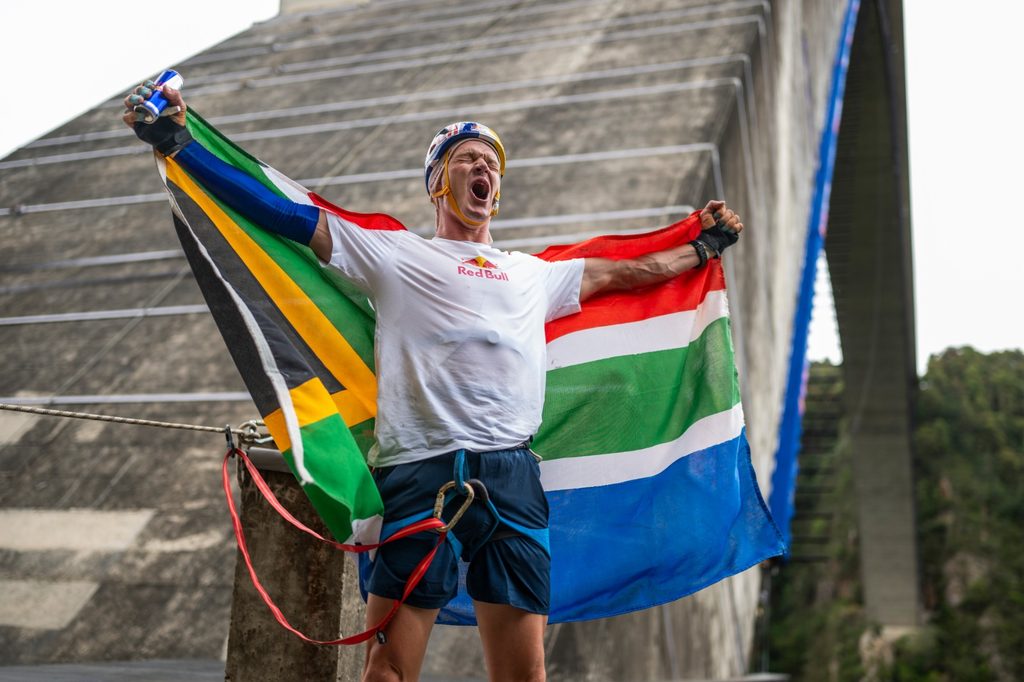
“Some people rigged through the night to make sure this bridge is ready for me this morning,” he said. “And then they stayed up there to keep me safe.” Lievaart watched Van Tonder’s hands and the slack in the safety line throughout the attempt. He said it was an “absolute relief” to know Van Tonder was safe and that the safety system had worked. He was also impressed by Van Tonder’s response when the attempt hit a snag. “He had the power to just stop, pause, sort it out and carry on,” Lievaart said.
What He Hopes His Children Take From It
Van Tonder hoped his children would learn from watching him take on something difficult, though he was not sure they understood the challenge at the time. “They were eating ice cream, running around,” he said. He hopes they will look back on the day in the future and feel inspired to face difficult things, even when they are scary.
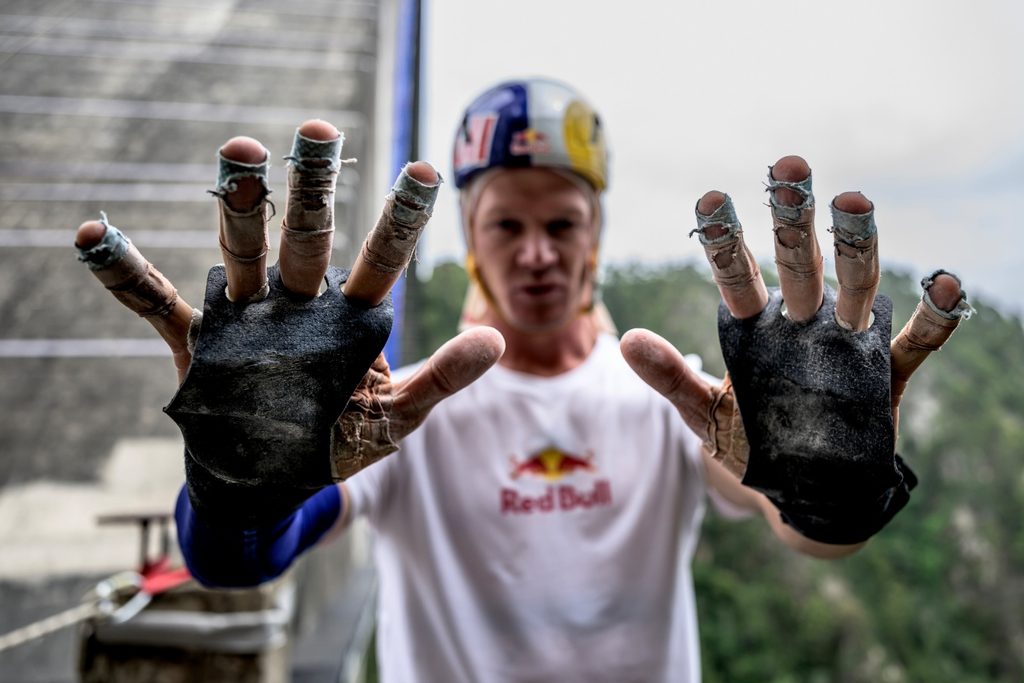
“I was definitely scared today multiple times, but that kind of means you’re in the right space, if that makes sense.” The first thing he wanted to do with his hands after the attempt was hug his wife and high-five his children. “It’s not hanging,” he said. “It’ll probably be hugging my wife and high-fiving my kids. I mean, these hands have carried me physically and not even just mentally. Yeah, I’m just grateful at this stage and trying to take it all in.”
Van Tonder became OCR world champion over 100 metres in 2019, the same year he signed with Red Bull. He also won the inaugural Red Bull Rancher Strong in 2025 and is a Guinness World Record holder.