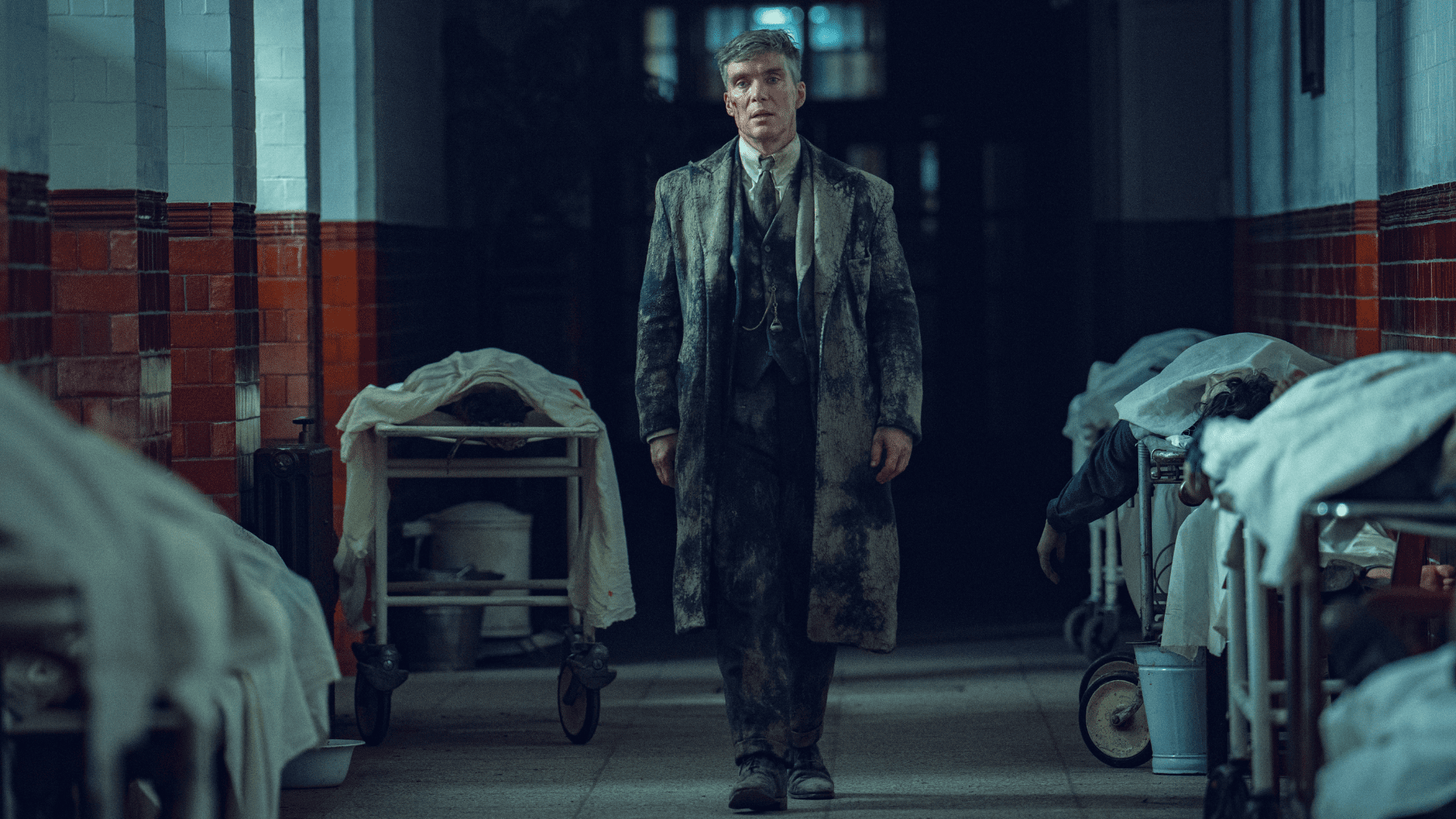
Four years after the final episode of Peaky Blinders aired, the Shelby family returns not for another season, but for something bigger. The story continues in a feature film, Peaky Blinders: The Immortal Man and Men’s Health had the opportunity to sit down with Tim Roth as well as creator Steven Knight and director Tom Harper to unpack what this next chapter really means.
Set in Birmingham in 1940, against the backdrop of World War II, the film pulls Tommy Shelby out of exile and forces him to confront the one thing he has always tried to outrun. Himself. This is not just a continuation. It is a reckoning and one that arrives with more weight, more scale and more urgency than anything that has come before.
The Shift From Series To Film
Moving from series to film often signals a dramatic change in tone, but for Knight and Harper, the goal was not to reinvent the DNA of Peaky Blinders. Instead, it was about expanding it. “The emotional stakes are the same,” Harper told Men’s Health. “This story is very much Tommy Shelby’s.”
What changes is the canvas. The film format allows the story to breathe in a different way. There is more room for spectacle, more room for tension and more room to explore the inner life of its central character without the constraints of episodic storytelling. At the same time, the essence remains intact. The sharp dialogue, the psychological intensity and the slow-burning power struggles are still very much present. The difference is that everything feels heightened. Every decision carries more weight because there is less time to escape it.
A War That Changes Everything
Setting the story in 1940 places it firmly within the chaos of World War II and that context reshapes everything. War is no longer a distant influence. It becomes immediate and unavoidable, pressing in on every character and every decision.
For Knight, this was an opportunity to place Tommy Shelby within a moment in history that mirrors his internal conflict. A world on the brink, where control is fragile and consequences are unavoidable.
READ MORE: Why Sinners Is a Must-See and How You Can Watch It Today
Harper described World War II as a setting that naturally brings scale. It allows the story to operate on two levels at once. On one hand, there is a sweeping geopolitical conflict. On the other, there is an intensely personal story about a man confronting his past. The balance between those two elements is what gives the film its edge. It is not just about war. It is about what war reveals.
Legacy Feels Different Now
If Peaky Blinders has always explored power, then it has always been equally obsessed with legacy. In this chapter, that idea becomes more urgent. Tommy Shelby is no longer just building an empire. He is confronting what remains of it. There is a growing sense that time is no longer on his side and that realisation forces a shift in perspective.
The film leans into questions that feel more introspective than ever before. What does he leave behind? What does redemption look like for someone who has spent a lifetime making ruthless decisions? And can a man like Tommy Shelby ever truly change?
This evolution adds a new layer to the character. He is still calculating, still composed, but there is a sense of reckoning that runs beneath the surface.
Tim Roth Enters The World
Joining the Peaky Blinders universe is Tim Roth, who plays Beckett, a figure operating in the shadows of power. His presence adds another layer of unpredictability to an already volatile world. For Roth, the decision to join the project was refreshingly straightforward. “What drew me to it was Cillian,” he said, referring to Cillian Murphy.
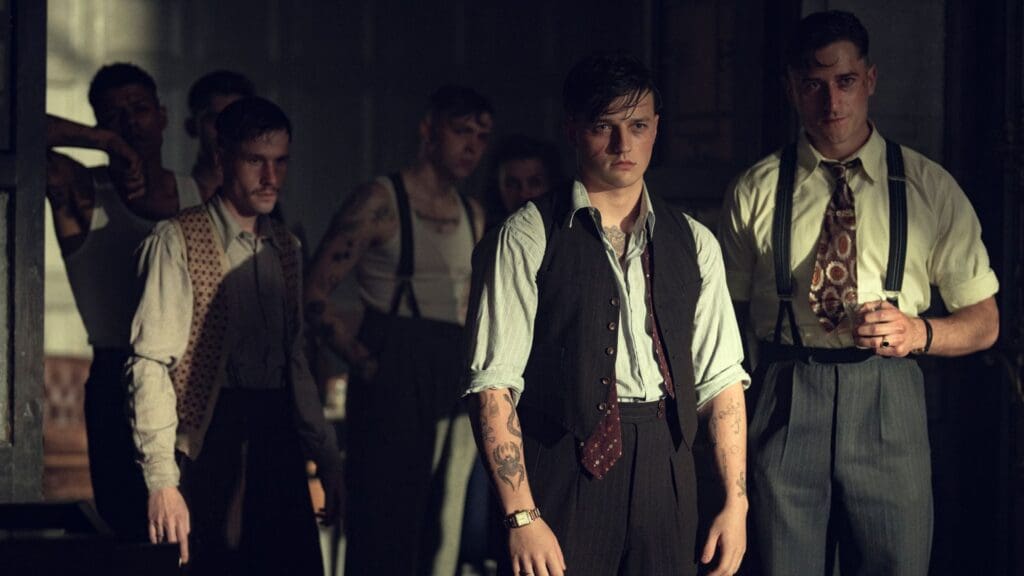
Rather than immersing himself in the series, Roth chose a different approach. “I didn’t watch it. I had never seen the show,” he explained. “So it was fresh for me.” That choice allowed him to build Beckett from the ground up, without being influenced by what audiences had come to expect from the Peaky Blinders universe. The result is a character that feels distinct, unpredictable and entirely his own.
The Psychology Behind The Performance
World War II is not just a narrative device in this film. It plays a crucial role in shaping the psychology of its characters. For Roth, that connection is deeply personal. “My father was in that war,” he shared. “So I had heard about it a lot.”
That history informed his understanding of the period, grounding his performance in something real. It also speaks to why World War II continues to resonate in storytelling. It represents a moment where the stakes were absolute, where identity, morality and survival were constantly being tested.
In the context of Peaky Blinders, that tension amplifies everything. It sharpens the emotional stakes and forces characters to confront choices they might otherwise avoid.
What Makes A Character Dangerous
Roth’s career has been defined by characters who sit on the edge of unpredictability. Beckett fits squarely into that tradition. When asked what keeps a character dangerous without pushing too far, Roth kept it simple. “Some people are just deranged,” he said. “But it’s fun to play with that.”
READ MORE: How to Watch One Battle After Another Plus Why Everyone Is Talking About It
The key lies in restraint. A character does not need to be chaotic at all times to feel threatening. Sometimes, it is the quiet moments, the sense that something could shift at any second, that create the most tension. That unpredictability is central to the Peaky Blinders world, where alliances are fragile and power is constantly shifting.
Bigger, Bolder, More Cinematic
One of the most noticeable differences in The Immortal Man is its scale. The move to film allows the production to push its ambition further than ever before. “We were able to blow things up for real,” Harper said. “We were able to have action sequences and take it that extra step further.”
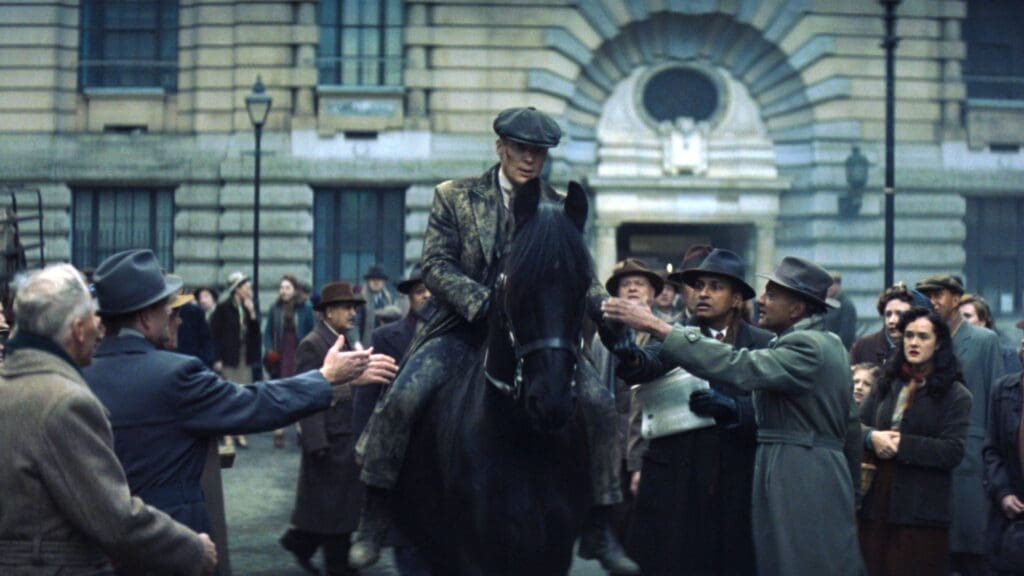
This is not just about spectacle for the sake of it. The expanded scale enhances the storytelling. It raises the stakes and creates a sense of immersion that draws audiences deeper into the world. At the same time, the film does not lose sight of what made the series successful. The grit, the tension and the focus on character remain at the centre of everything.
The Return Of Tommy Shelby
At its core, Peaky Blinders: The Immortal Man is still about one man. Tommy Shelby. Played by Cillian Murphy, the character has always been defined by resilience, control and an ability to stay one step ahead. But in this chapter, those traits are tested in new ways.
READ MORE: What to Stream This Month on Showmax, Netflix, Disney+ and More
With the world at war and his past catching up to him, Tommy is forced to confront a version of himself that he can no longer ignore. The question is no longer how he wins, but what winning actually means. This shift brings a new level of depth to the character. It is not just about power. It is about identity.
Everything You Need To Know
Peaky Blinders: The Immortal Man stars Cillian Murphy, Rebecca Ferguson, Tim Roth, Barry Keoghan and Stephen Graham. It is written by Steven Knight and directed by Tom Harper. The film was released in cinemas on March 6 and is available to stream on Netflix today.