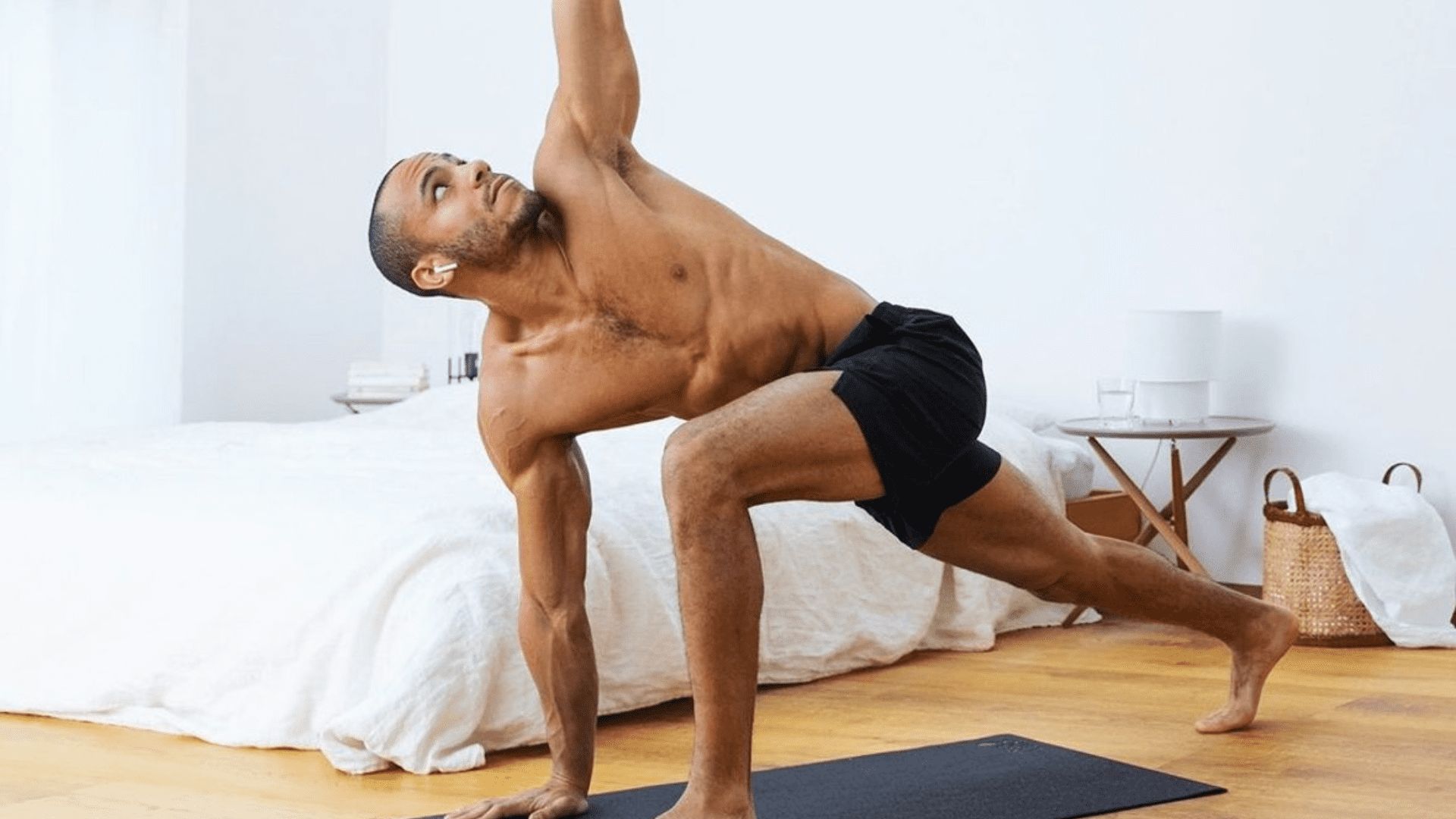
Your training programme might look solid on paper. A few strength sessions, regular runs and the occasional workout that leaves you questioning your decisions. But how much attention are you giving to the way you move between those sessions? If your shoulders feel restricted overhead or your hips make a deep squat uncomfortable, it could be time to give yoga a chance.
According to Geraldine Anderson, Head of Group Training at Planet Fitness, yoga can complement the work you’re already doing by bringing more attention to mobility, balance and body awareness. “The biggest surprise is usually how much strength yoga demands,” she says. “People expect to stretch and instead find their shoulders burning in plank or their quads shaking in chair pose.” There’s research behind some of those benefits too. Here’s what yoga could add to your routine and how to start without turning your week into another training marathon.
Yoga Works on More Than Flexibility
Being able to touch your toes is one thing. Having control over your movement is another. Anderson makes a useful distinction: flexibility describes how far you can stretch, while mobility involves moving through a range of motion with control. Yoga gives you opportunities to practise both, through held positions, flowing transitions and balance work.
Moving from downward dog into plank, for example, asks you to manage your body weight as your position changes. A standing balance pose challenges you to stay steady rather than simply reach further.
A small 2016 study involving 26 male college athletes found improvements in flexibility and balance among those who added twice-weekly yoga sessions to their training for 10 weeks. However, the groups played different sports and weren’t randomly assigned, so the findings are promising rather than definitive proof of better sporting performance. For Anderson, the practical aim is straightforward: develop movement you can control, rather than chase the deepest possible stretch.
It Can Challenge Your Strength in Unfamiliar Ways
If you’ve written yoga off as an easy stretching session, chair pose might change your mind. Anderson explains that more demanding classes can challenge muscular endurance, balance and your ability to keep breathing comfortably under effort. Holding a plank or controlling a slow transition can feel surprisingly tough, even when you’re used to lifting weights.
The challenge also depends on the class. A vigorous power or vinyasa session serves a different purpose from a supported restorative practice. “A hard class isn’t ‘better’,” Anderson says. “It’s just a different tool.” That distinction matters when you’re planning your week. If your legs are already carrying the fatigue of a hard run and a heavy strength session, another demanding class adds to that workload.
Yoga May Help You Feel Less Stressed
Sometimes the most useful part of a session is having somewhere to put your attention other than your inbox. Anderson says yoga can help people become more aware of their breathing and notice when they’re holding unnecessary tension. The practice gives you time to slow down and pay attention to how you feel.
READ MORE: Mandla Enoch Shares Simple Yoga Practices for Energy and Mental Clarity
A randomised controlled trial published in Psychoneuroendocrinology in 2025 studied 98 participants over eight weeks. Those assigned to Hatha yoga reported lower momentary stress than a waitlist group. The researchers did not find corresponding changes in the daily patterns of two saliva-based stress markers, including cortisol. That supports a measured claim: yoga may help you feel less stressed, without necessarily producing the hormonal changes sometimes promised online.
Recovery Needs More Than a Stretch
Anderson recommends choosing your practice according to your energy levels and training demands. A gentle session may suit a day when you want comfortable movement and time to unwind. A challenging flow is another workout to account for.
It’s also worth keeping expectations realistic. Stretching after exercise has not been shown to reliably speed up strength recovery or reduce delayed-onset muscle soreness compared with rest, according to a 2021 systematic review and meta-analysis. The researchers rated confidence in the available evidence as very low. That review examined stretching, rather than complete yoga programmes, but it cautions against treating a post-workout stretch as a guaranteed recovery fix. Use a gentle practice because it feels manageable and helps you wind down. Keep giving yourself enough food, sleep and rest too. “When in doubt, do less,” Anderson advises.
Tailor Your Practice to Your Training
Anderson suggests runners pay particular attention to the hips, hamstrings, calves and upper back, with single-leg balance and ankle mobility included in their practice. For lifters, she recommends focusing on shoulder mobility, upper-back movement and hip rotation, alongside positions that challenge core control.
READ MORE: 7 Reasons Why Yoga is Important for Mind, Body, and Soul
These are areas to explore with an instructor, rather than a checklist of problems to diagnose yourself. Struggling with a pose doesn’t automatically mean a particular muscle is weak or that sitting has damaged your hips. Tell your instructor what your training week looks like and which movements feel restricted. They can help you choose suitable variations and props.
You Don’t Need To Be Flexible To Start
Waiting until you’re flexible enough for yoga could mean waiting forever. “You don’t need to be flexible to start yoga,” Anderson says. “That’s like saying you need to be fit to go to the gym.” Bent knees, blocks and straps can help you find a comfortable position. Start with a class clearly labelled for beginners and let the instructor know it’s your first session.
Anderson identifies several common mistakes: copying the instructor’s deepest position, holding your breath and chasing a stretch before establishing stability.
READ MORE: The 4 Ways Yoga Can Improve Chronic Health Conditions
Your first goal is to learn the movements at a level you can manage. If you have an existing injury or persistent pain, discuss suitable modifications with a healthcare professional and your instructor. Yoga can cause injuries, so qualified guidance and appropriate progression matter.
Start With a Manageable Routine
Anderson suggests one or two dedicated classes a week as a practical starting point for many runners and lifters. Shorter sessions can also help you build a consistent habit.
For a gentle post-workout practice, she recommends the following sequence:
- Child’s pose: One minute.
- Cat-cow: Eight to 10 slow rounds.
- Downward dog: Five comfortable breaths.
- Low lunge: Five breaths on each side.
- Pigeon or a lying figure-four stretch: One minute on each side.
- Seated forward fold: One minute, with bent knees if needed.
- Supine twist: One minute on each side.
- Legs up the wall: Two to three minutes, if comfortable.
Ask an instructor to demonstrate unfamiliar positions, adapt anything that feels uncomfortable and avoid forcing your range. The real measure of progress is how your movement feels over time: more comfortable positions, steadier balance and better awareness of what your body can manage. “The people who stick with it aren’t the bendy ones,” Anderson says. “They’re the ones who show up consistently.”

Meet Geraldine Anderson
Geraldine Anderson brings more than 24 years of yoga teaching experience and a passion for strength and fitness to her role as Head of Group Training at Planet Fitness. She helps people discover how yoga can support their training, ease stress and create space to reset.
A qualified yoga teacher, Geraldine specialises in Hatha, Vinyasa, Yin and pregnancy yoga, as well as meditation. She also offers teacher training and is trained in AntiGravity Yoga, bringing variety and a sense of exploration to her classes.
Whether welcoming beginners or introducing athletes to yoga, Geraldine combines motivation with a focus on physical and mental wellbeing. Her approach encourages people to build strength, find balance and feel more confident in how they move.