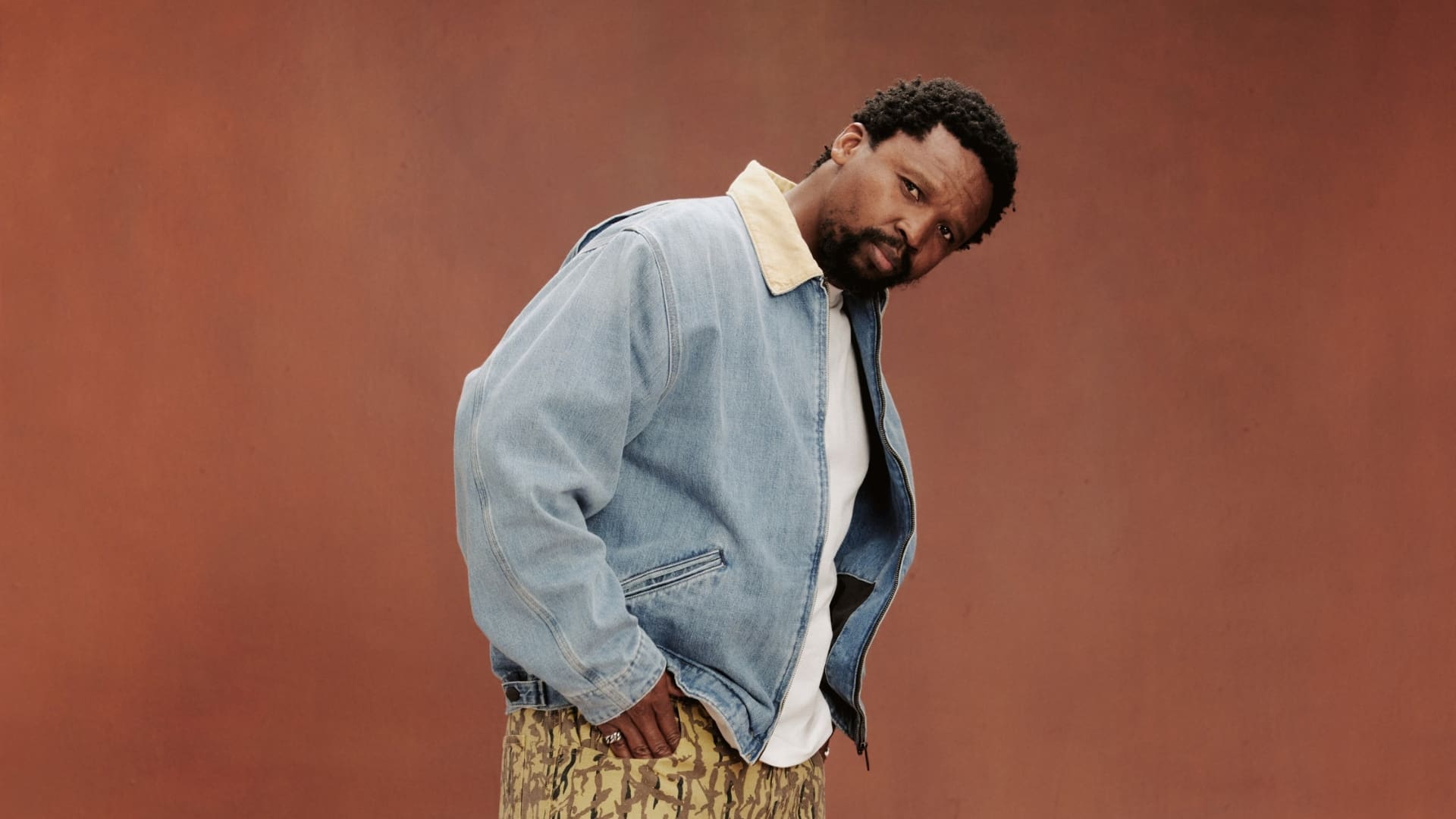
The multidisciplinary artist explains how graffiti became his language of resistance, why movement represents strength and how he made an everyday icon his own.
Breeze Yoko is not interested in standing still. The South African artist moves between graffiti, film, printmaking and curating, but beneath each medium sits the same pursuit: a search for the future he believes society may have left behind.
“A friend once told me something that stuck with me, that in our work, we’re always telling the same story, just in different forms,” he says. “For me, that story starts with a feeling that we left the future behind somewhere.”
Whether he is painting a wall, producing a film or creating a platform for other artists, Yoko is pulling from the past to imagine what might still be possible.
That approach made him a natural fit for BIRKENSTOCK South Africa’s “50 Ways Worn” campaign, created to celebrate 50 years of the Boston. The campaign brings together different creatives, professionals and storytellers, each interpreting the familiar silhouette through their own identity and way of life.
READ MORE: Why the BIRKENSTOCK Boston Clog Is Still an Everyday Style Icon After 50 Years
For Yoko, individuality is not about forcing something to stand out. It is about being comfortable enough to show up as yourself.
Growing up With Art as Resistance
Yoko grew up in Gugulethu and Nyanga East during some of the most intense resistance to apartheid. His earliest understanding of art was therefore inseparable from activism. “The murals around me, the slogans, the artists we grew up around, all of it was linked, in some way, to resistance and the upliftment of African people,” he says.
Even then, he sensed that art could offer more than a record of struggle. Comics introduced him to magical and futuristic worlds where the limitations of his surroundings no longer applied. Hip hop later led him to graffiti and its rebellious refusal to ask for permission. “It was representing the unseen, the discarded, the ones who were vilified for daring to be different,” he explains. Graffiti gave Yoko a way to challenge who was visible in public spaces and whose stories were considered worthy of being placed on a wall.
Creating a South African Visual Language
Finding an authentically South African visual language remains an ongoing process for Yoko. “As a nation, we’re steeped in an identity of symbolism, historically, culturally and spiritually,” he says. “And yet that richness doesn’t easily translate onto our walls.” His response is to draw deliberately from those influences without allowing the work to become trapped in nostalgia.
“I’m cautious about how I represent ‘us’, careful not to be arrested in the past. I reimagine futures with the past in mind and ground them consciously in the present.” That responsibility becomes even more important when his work enters a public space. Yoko frequently creates murals in communities where he does not live, which means other people must continue living with the image long after he has packed away his materials.
“First story, then community,” he says. “Whatever story I’m trying to tell with the mural, I always make sure the community can relate or see themselves in it.” That approach has led to conversations with residents who often find meanings in the work that Yoko had not anticipated. The mural becomes more than a finished image. It becomes part of the community’s daily environment and an invitation to interpret, question and respond.
Why Movement Represents Strength
Movement is a recurring feature of Yoko’s work. Although painting, drawing and printmaking are static mediums, he uses movement to introduce energy, tension and life. “Stillness usually reads as permanence or contemplation. Movement reads as vitality, tension and agency,” he says.
For Yoko, strength is not the ability to remain fixed. It is the ability to adapt when circumstances change. “The ability to adapt, pivot and keep going. Keep it moving,” he says. “A body in motion just reads as capable, alive and vital in a way a still body can’t.”
It is a definition of strength rooted in resilience rather than rigidity. Movement also turns the viewer’s attention towards what might happen next, creating space for imagination and possibility. “That’s where the power is, in the imagination.”
How He Keeps His Body and Mind Moving
Painting large-scale murals can mean spending hours on his feet, climbing ladders and working from cherry pickers. Yoko’s creative practice is therefore as physically demanding as it is mentally absorbing. Away from the wall, cycling helps him maintain both his physical and mental energy.
READ MORE: Your Post-Workout Recovery Starts with Birkenstock
“I love cycling, not as a sport, but as a way of commuting,” he says. “It clears my head. It slows me down. And I get a workout just getting where I’m going.” He also creates distance from work by reading, particularly material that has nothing to do with his current projects. It gives him an opportunity to take in new information without the constant presence of a screen.
His family plays an equally important role. Spending time with his children pulls him out of work mode and keeps him grounded when his creative life begins to consume too much space.
Making the Boston His Own
BIRKENSTOCK describes the Boston as “The Everyday Icon”, a silhouette that has remained recognisable while moving across generations, cultures and changing trends. From Yoko’s perspective, an ordinary object becomes iconic when it stands out without appearing to try. Its value is proven through consistency rather than hype.
The “50 Ways Worn” campaign celebrates that idea by showing how one silhouette can take on different identities depending on the person wearing it. Yoko’s interpretation required very little intervention. “The Bostons are probably the only shoes of mine that don’t have paint on them, at least not yet,” he says. “They feel like my own because they are just comfortable shoes, and when I’m comfortable, that brings the best out in me.” Rather than dramatically restyling or modifying them, he simply wore them and allowed his personality to do the rest.
Why Function Never Goes Out of Style
Yoko sees a connection between the Boston’s longevity and the way he approaches his own work. Both begin with function. “If I centre story, I don’t lose function. The piece still has to do something, still has to communicate,” he explains. “If I keep community in mind, I get longevity because I’m not just making for a moment. I’m making for people who’ll carry it forward.”
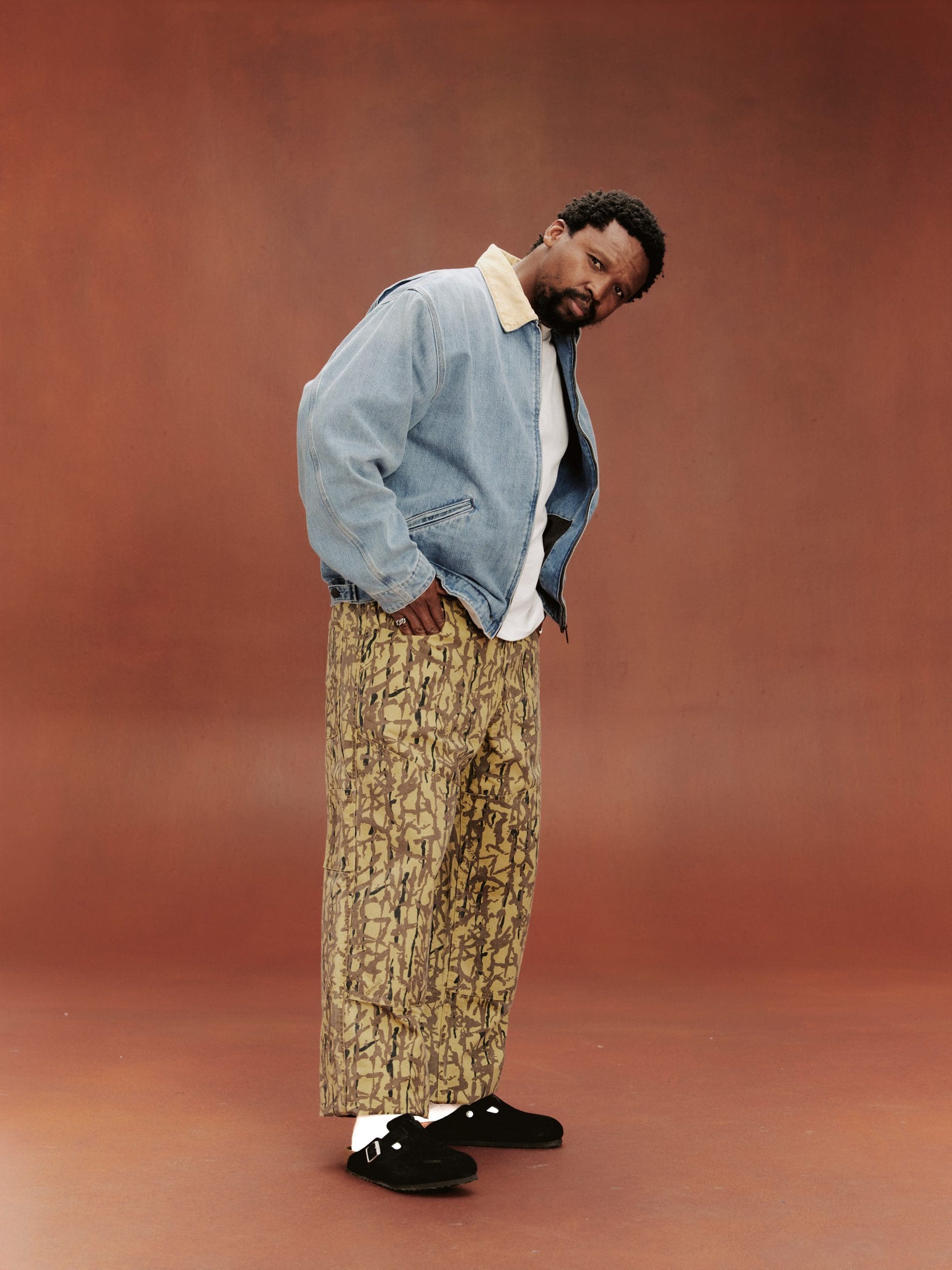
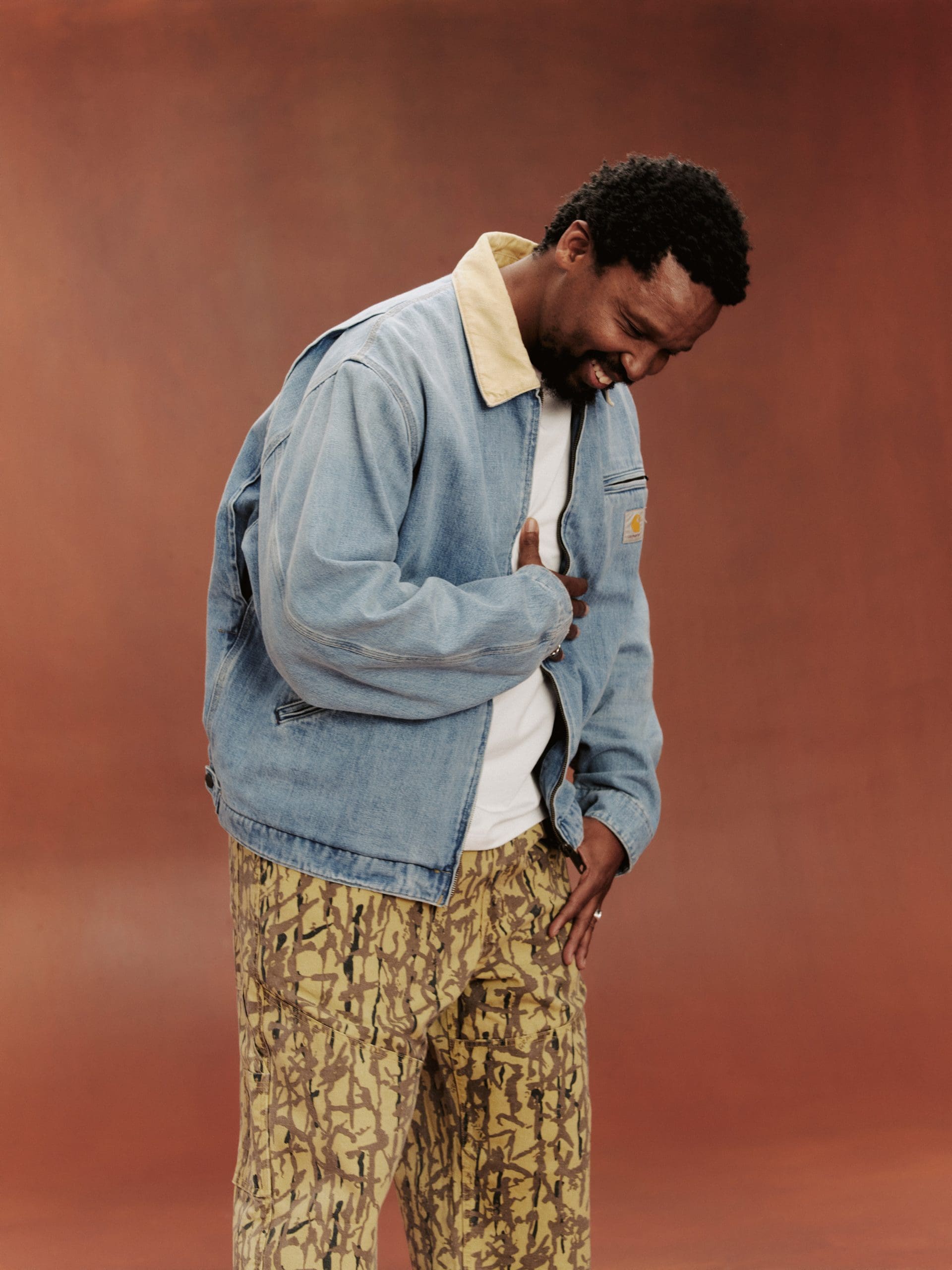
Once story and community are secure, he has the freedom to experiment with different mediums and forms without losing his identity. “The Boston stayed relevant because function never went out of style. Trends shifted around it, but what it does didn’t change. I think about my work the same way.”
Comfort is equally important. When moving through a city, Yoko needs what he wears to allow him to focus on the work instead of becoming a distraction. On active mural sites, durability and protection become non-negotiable. He often works around uneven ground, debris and broken glass, so every part of his outfit needs to serve a purpose. “And of course, still look good doing it,” he adds.
Collaboration Must Leave Room for the Artist
Brand partnerships can provide artists with a reliable source of income, but Yoko believes that financial opportunity should not come at the expense of creative agency. “A lot of the time, artists become tools used to promote whatever a brand is selling, with very little say in how,” he says.
His starting point is a clear understanding of his own identity and values. That becomes the standard against which he measures any potential partnership. “Beyond alignment, it has to actually be a collaboration. I’m not interested in just being a vessel for someone else’s idea. It should be a relationship built on mutual respect.”
Building a Future for South African Artists
Yoko’s work now extends beyond his individual practice. Through initiatives such as the Cape Town Print Fair, he is helping to create platforms where other artists can share and sell their work. He believes South Africa needs more patrons who buy art because they connect with it, rather than treating it solely as a financial investment.
READ MORE: Looking at Art Is Proven to Lower Stress – Here’s How (And Why) It Works
The country also needs more accessible platforms that reflect the diversity of its creative community. “There’s a lot of genuine appetite to support art and artists in this country, but the way art is often sold and the lack of accessible, varied platforms make it hard for people to actually tap in,” he says. The Cape Town Print Fair is attempting to bridge that gap by bringing artists and audiences closer together and meeting potential buyers where they are.
His Advice to the Next Generation
Yoko does not pretend that building a creative career is easy. It requires focus, sacrifice and consistency, particularly for young artists growing up in communities where a career in the arts may not appear realistic. His advice is simple: keep creating. “Dare to be different, even if it’s not a career yet, just to honour the vision entrusted to you,” he says.
He also warns against treating every creative impulse as something that must immediately generate income. “Voice comes first. Income can come later. Sometimes that means making money elsewhere for a while and creating simply because you’re called to, for love of it, not for what it earns you yet.” For Yoko, the future is found through motion. It is built by adapting, experimenting and continuing to create, even when the destination is not yet clear. “Keep creating and stay consistent no matter what. Keep creating.”