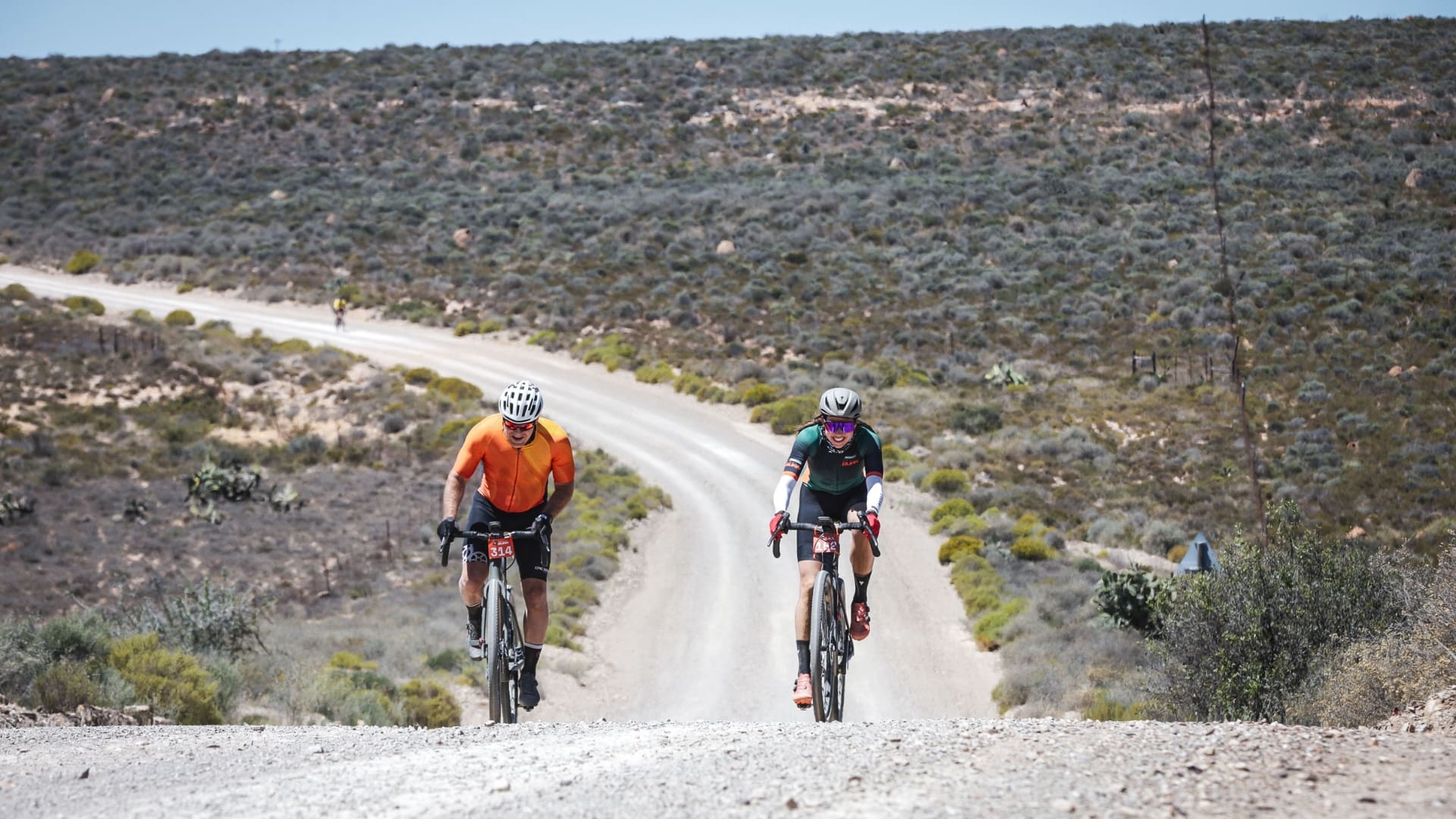
The first stage can fool you. Your legs are fresh, the adrenaline is high and it feels easy to delay a gel, chase a faster group or push harder than planned. Then you wake up the next morning and realise you still have six stages to ride. Nedbank Gravel Burn demands that riders cover 750km and climb 8,500m across seven days. The 2026 route runs through the Eastern Cape from Robert Sobukwe Town, also known as Graaff-Reinet, to Shamwari Private Game Reserve. Individual stages range from 61km to 137km, with changing terrain and conditions along the way.
Finishing a race like this requires more than strong legs. You need a fuelling strategy your stomach can handle, a recovery routine you can repeat and enough restraint to avoid spending all your energy before the real fatigue arrives. Paul Goddard, a Bicycling magazine contributor and finisher of multiple mountain bike and gravel stage races, shares how to eat, hydrate and recover through the week. Piet Calitz, a 2025 Nedbank Gravel Burn finisher and enudrance sport legend, adds the lessons he learned from riding the inaugural event.
Remember That You’re Fuelling for Tomorrow
The biggest difference between a single long ride and a multi-day event is what waits for you the following morning. “You are always fuelling for tomorrow,” says Goddard. “A multi-day stage race is as much an eating competition as it is a bike race.” Eating enough during one stage can influence how well you ride the next. Fall behind on your fuelling today and you may begin tomorrow with depleted energy stores, heavy legs and a bigger recovery deficit. That makes consistency more valuable than attempting to rescue your energy after it has already disappeared.
Eat Before You Clip In
Goddard recommends aiming for around 2g of carbohydrates per kilogram of body weight at least two hours before the stage begins. For a 75kg rider, that works out to approximately 150g of carbohydrates. That can be a significant meal, particularly when nerves and an early start affect your appetite, so practise the routine during training.
READ MORE: A Look Inside the Nedbank Gravel Burn, South Africa’s First Gravel Event
Use your longer weekend rides to test the timing, portion and type of breakfast that works for you. You should know before race week what you can comfortably eat and how much time your body needs to digest it.
Fuel According to the Clock
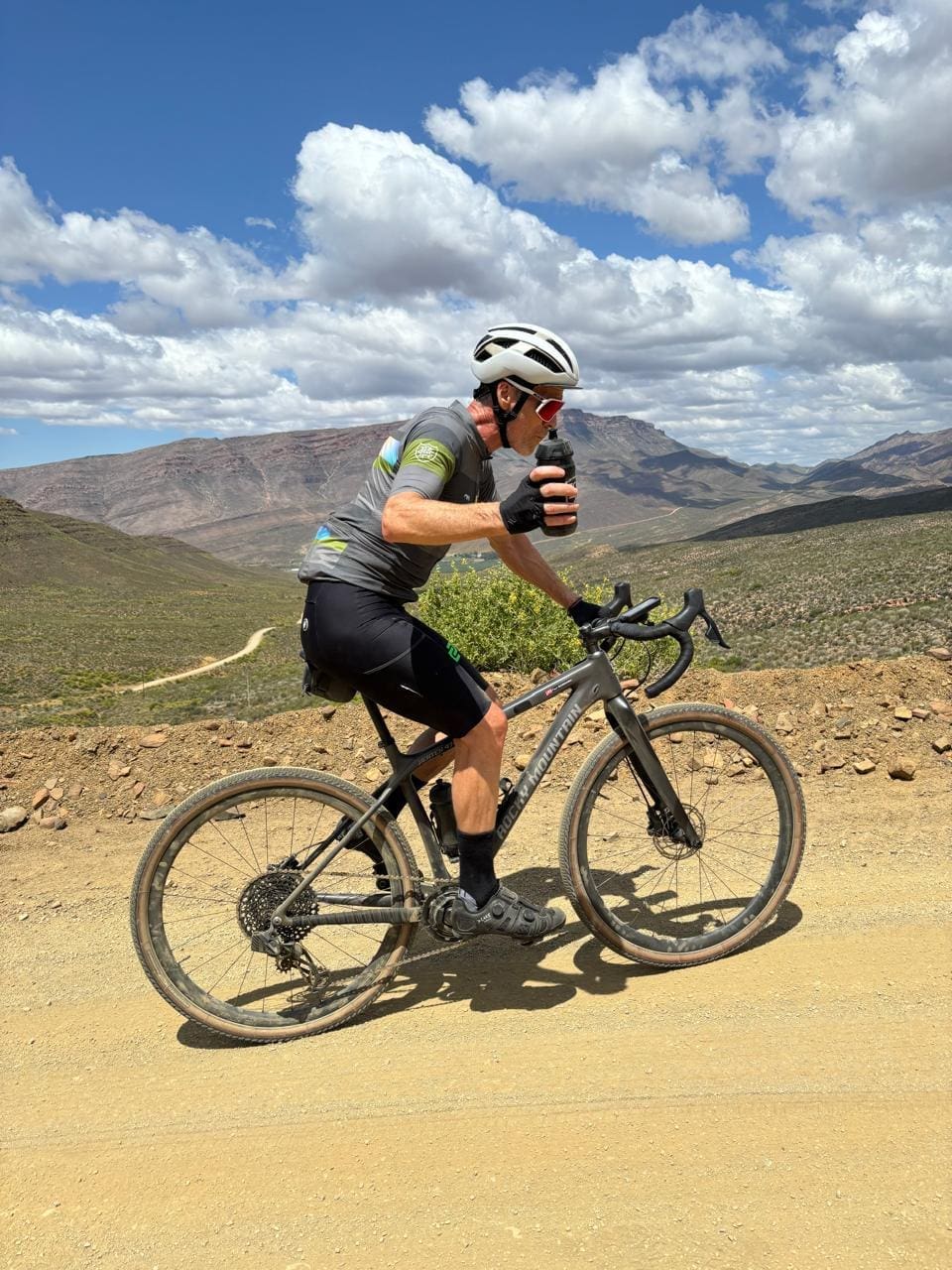
Waiting until you feel hungry is one of the easiest ways to derail a stage. “Start eating early and eat often,” says Goddard. He recommends consuming at least 30g of carbohydrates every 30 to 40 minutes. That equates to roughly 45g to 60g an hour.
Gels work well because they are compact, quick to consume and easy to open on the bike. Bars can provide another source of carbohydrates, although they may become harder to chew and swallow when you are riding hard. Carbohydrate drink mix can help you take in additional energy while you hydrate.
The best combination will depend on what you enjoy and what your stomach tolerates. Your job during training is to find that combination before you arrive at the start line.
Set a Reminder Before Your Energy Disappears
When the route demands your full attention, eating can slip down the priority list. Goddard recommends setting an alert on your Garmin Edge or another bike computer every 30 to 40 minutes. His alert delivers a very simple instruction: “EAT”. It may sound unnecessary while you’re sitting at home with a perfectly organised race plan. Several hours into a stage, with tired legs and a wheel to follow, that reminder could stop you from missing a feed. The alternative is bonking, the sudden and miserable energy crash that can leave you feeling flat and struggling to turn the pedals. Once you reach that point, recovering while you are still riding can be difficult. Regular intake gives you a better chance of avoiding it.
Match Your Fuel to the Stage
Nedbank Gravel Burn does not ask the same thing of riders every day. A 61km stage and a 137km stage require different quantities of food and fluid. For a longer or harder stage, Goddard recommends increasing your carbohydrate intake according to the amount your gut has learned to tolerate. You may also need more fluid, particularly if the heat, wind or expected time on the bike increases.
READ MORE: How Two Young Riders Took on the Nedbank Gravel Burn and Found Growth on the Road
Check the route and weather forecast the evening before each stage. Look at the distance, climbing, temperature and wind, then estimate how long you expect to be riding. Use that information to calculate how much fuel, fluid and electrolytes you will need. Plan how you will reach your carbohydrate target through a combination of gels, bars and drink mix. Pack it with your kit the night before so the decision has already been made when you wake up.
Start Recovering at the Finish Line
Crossing the line ends the stage, but it begins the preparation for tomorrow. Goddard advises riders to consume carbohydrates and protein as soon as possible after finishing. Carbohydrates help replace the energy used during the ride, while protein supports muscle repair.
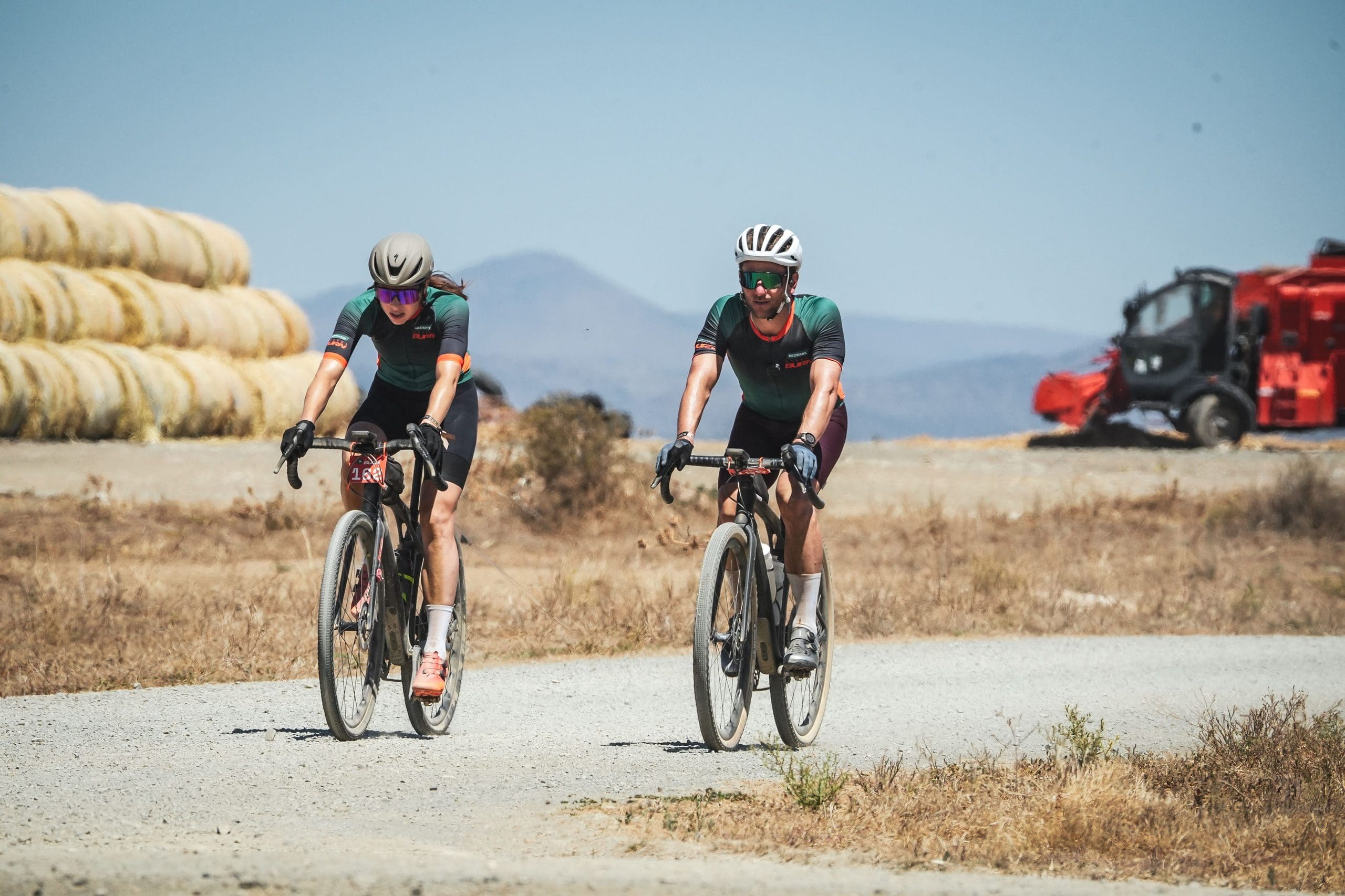
Don’t leave your recovery meal until after you have showered, unpacked and spent an hour talking through the day. Have something ready so you can begin refuelling immediately. This is where Goddard’s advice to eat for tomorrow becomes practical. Your post-stage nutrition is also the beginning of your next stage’s fuelling plan.
Make Sleep Your Biggest Recovery Tool
Recovery gadgets may attract plenty of attention in the race village, but Goddard places sleep ahead of ice baths, massage and compression boots. Your sleep environment will also be different from the one you have at home. Sound travels easily through tent walls, so Goddard recommends packing earplugs to block out snoring and general race village noise.
READ MORE: Nedbank Gravel Burn Reveals Its 2026 Route From Graaff Reinet to Shamwari
If sleep medication forms part of your plan, discuss it with a healthcare professional before the event and use it only as directed. Race week is not the time to experiment with a new sleep aid. The aim is to give yourself at least six hours of quality sleep and make the most of the limited recovery time between stages.
Use Recovery Tools for What They Can Do
Ice baths may help alleviate the feeling of muscle soreness, but Goddard cautions against assuming that they will automatically speed up recovery. Massage can also help you feel looser or more comfortable without erasing the accumulated fatigue of several hard days. Use those tools if they make you feel better, but keep the fundamentals in place. Eat enough, replace fluids, get off your feet and sleep. No recovery treatment can compensate for repeatedly missing meals or staying up late in the race village.
Know When Fatigue Needs Attention
Heavy legs and general tiredness are expected during a stage race. Goddard says riders may also find it increasingly difficult to elevate their heart rate on the bike as fatigue accumulates.
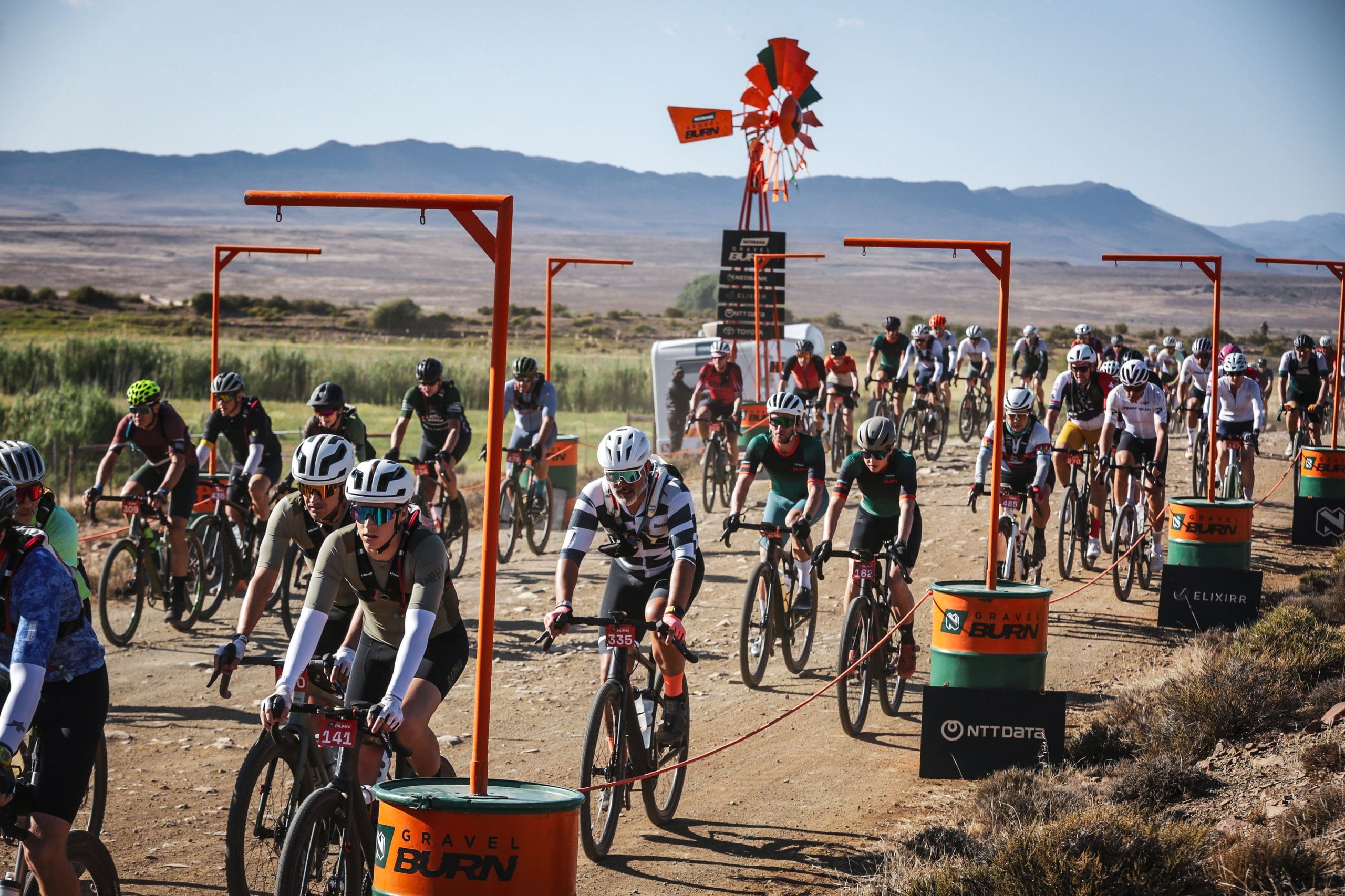
Feeling unwell is a different matter. A fever or elevated temperature is a reason to stop and seek medical assistance. Riding with a fever can be dangerous, particularly when your immune system is already under pressure from several days of hard effort and close contact with other riders in the race village. Pay attention to more than your performance data. How you feel matters too.
Train Your Stomach Before the Race
You train your legs to handle the distance, but your gut also needs practice. Goddard recommends rehearsing your fuelling strategy on long weekend rides for at least six weeks before the event. Use the same gels, bars and drink mix you intend to carry during the race. This gives you time to learn how many carbohydrates you can tolerate per hour and whether a particular flavour, texture or product becomes difficult to consume after several hours. “Nothing new in race week, ever,” he says. By the time you reach Nedbank Gravel Burn, your products, quantities and timing should all feel familiar.
Choose Durability Over a Lighter Bike
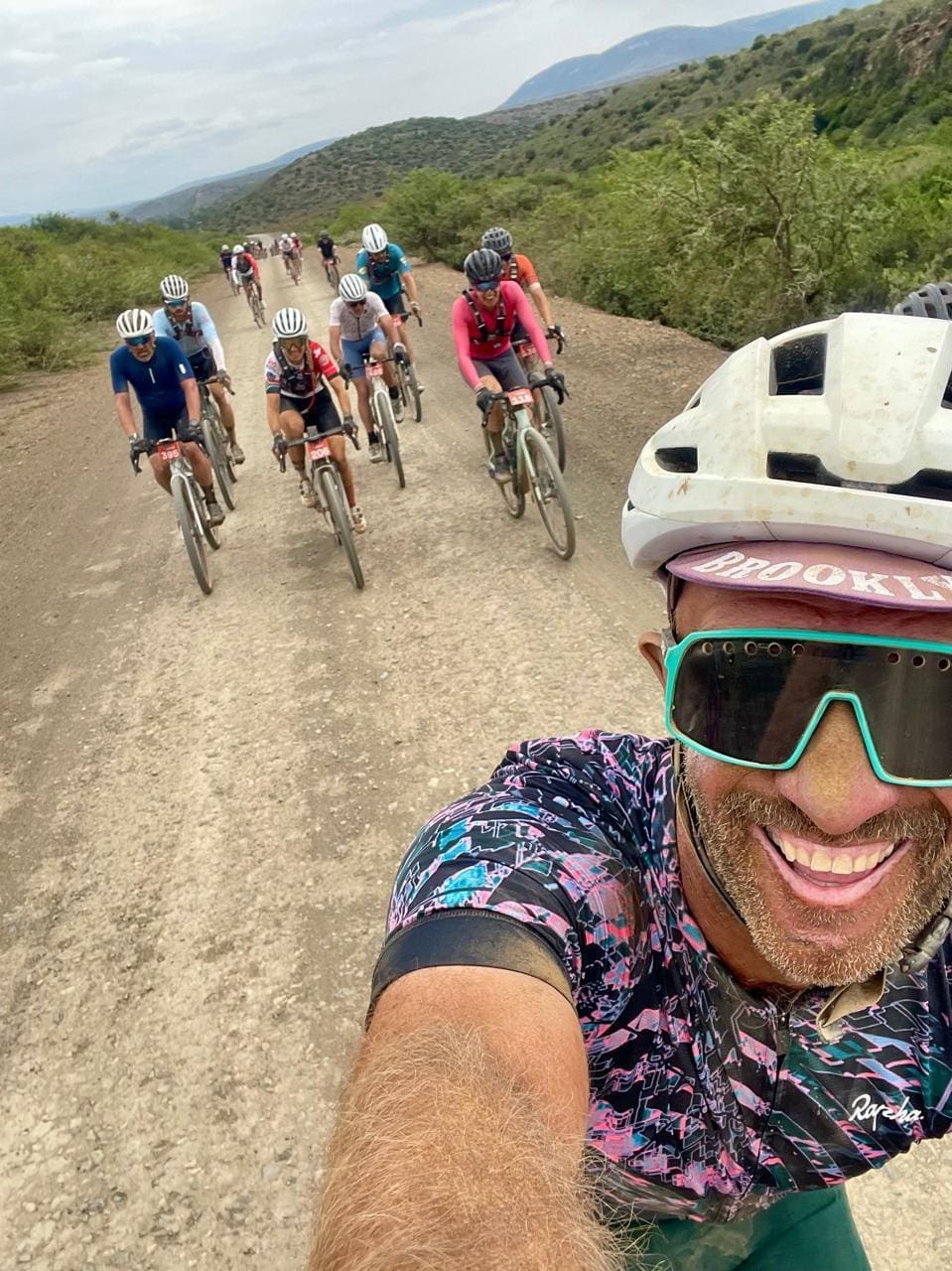
Fuelling and recovery will only get you so far if your equipment cannot handle the week. Callitz’s first lesson from completing Nedbank Gravel Burn in 2025 is to build your bike around reliability. “Spec your bike for durability over being concerned with weight,” he advises.
A slightly lighter setup offers little comfort if mechanical problems leave you stranded or cost you significant time. Choose tyres, components and spares that can withstand seven days of gravel rather than selecting everything according to the number on the scale.
Prepare for Every Version of the Weather
The Karoo may look warm and dry in the photographs, but Callitz warns riders to prepare for far more variety. “Pack for all weather conditions: rain, wind, freezing cold and extreme heat,” he says. “We had it all served up last year.” Check the forecast daily, but pack enough layers and protection to handle conditions changing during a stage. Weather can also affect your fuelling plan. Extreme heat may increase your fluid and electrolyte needs, while wind can extend the time you spend on the bike.
Find Your People and Enjoy the Ride
Calitz’s final tip may be the hardest one for an excited first-time rider to follow: “Do not race. Enjoy the ride.” For riders focused on finishing and experiencing the event, he recommends finding a group of similar strength and working together. Stop at the aid stations, take a moment to reset and then continue as a group.
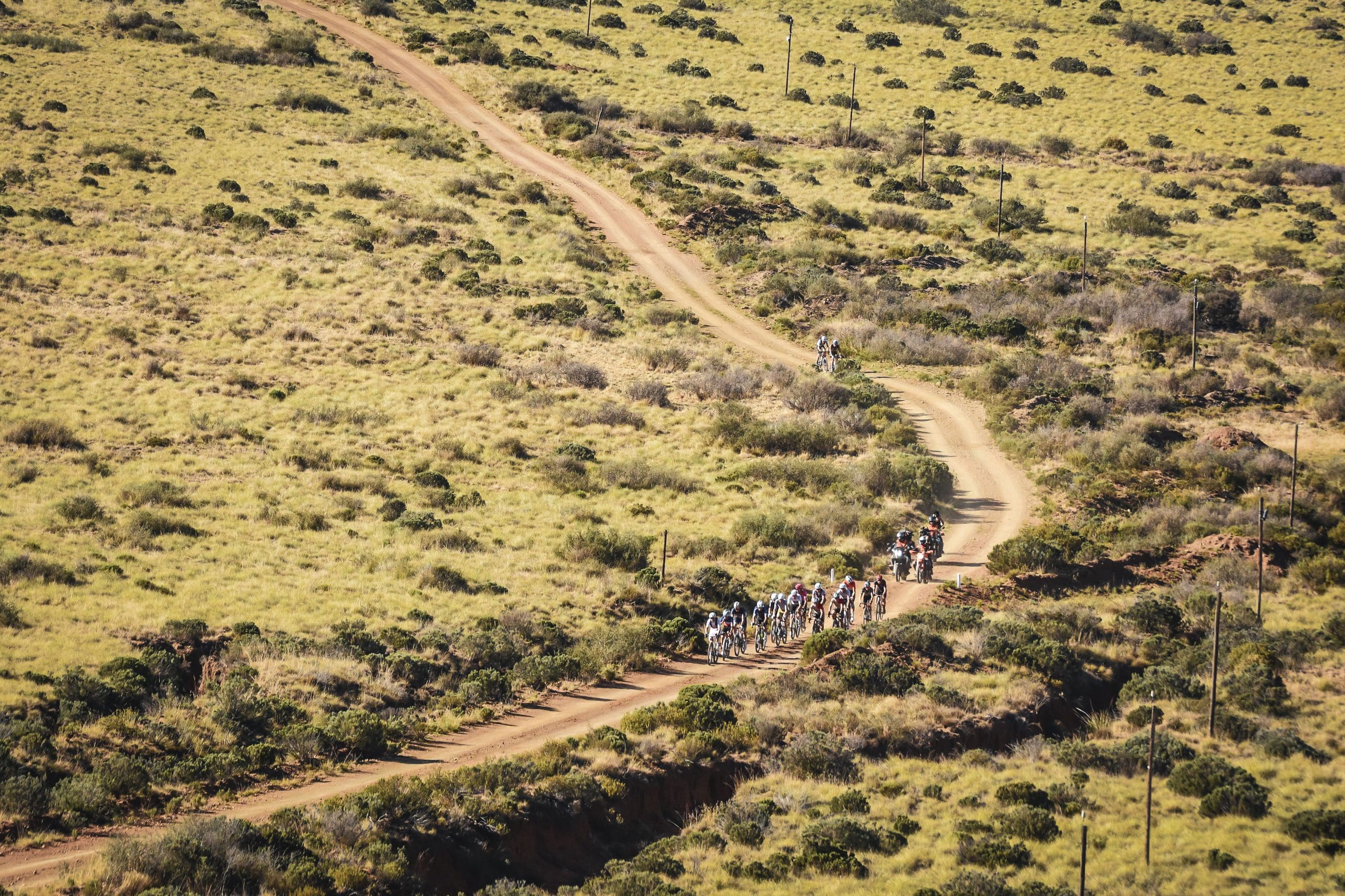
“Riding 30 minutes longer each day will not make a difference in the big picture, and you will have a much better experience overall,” he says. There will always be another rider to chase and another few minutes you could attempt to save. Across seven days, however, patience, company and consistent effort may take you further than treating every stage like a one-day showdown.
Your Three Rules for the Week
Goddard reduces his fuelling strategy to three reminders:
- Eat early and often, and remember that you are fuelling for tomorrow.
- Know how many carbohydrates your gut can tolerate because you practised during training.
- Plan how you will reach your target using gels, bars and drink mix according to the stage length and expected time on the bike.
Add Callitz’s advice to build a durable bike, pack for every condition and find riders who match your strength. Nedbank Gravel Burn will test your fitness, but getting through all seven stages also requires discipline away from the hard efforts. Eat before you’re hungry, recover before you feel broken and save enough of yourself to enjoy the road still waiting tomorrow. Find out more at gravel-burn.com.